
We spent a week moving between Cape Town, Hermanus, and Johannesburg, and it turned out to be perfect for our South Africa itinerary. If you’re an Indian traveller trying to figure out the South Africa visa process, how to plan a route, and how much time to spend where, here’s everything we wish we’d known before we left.
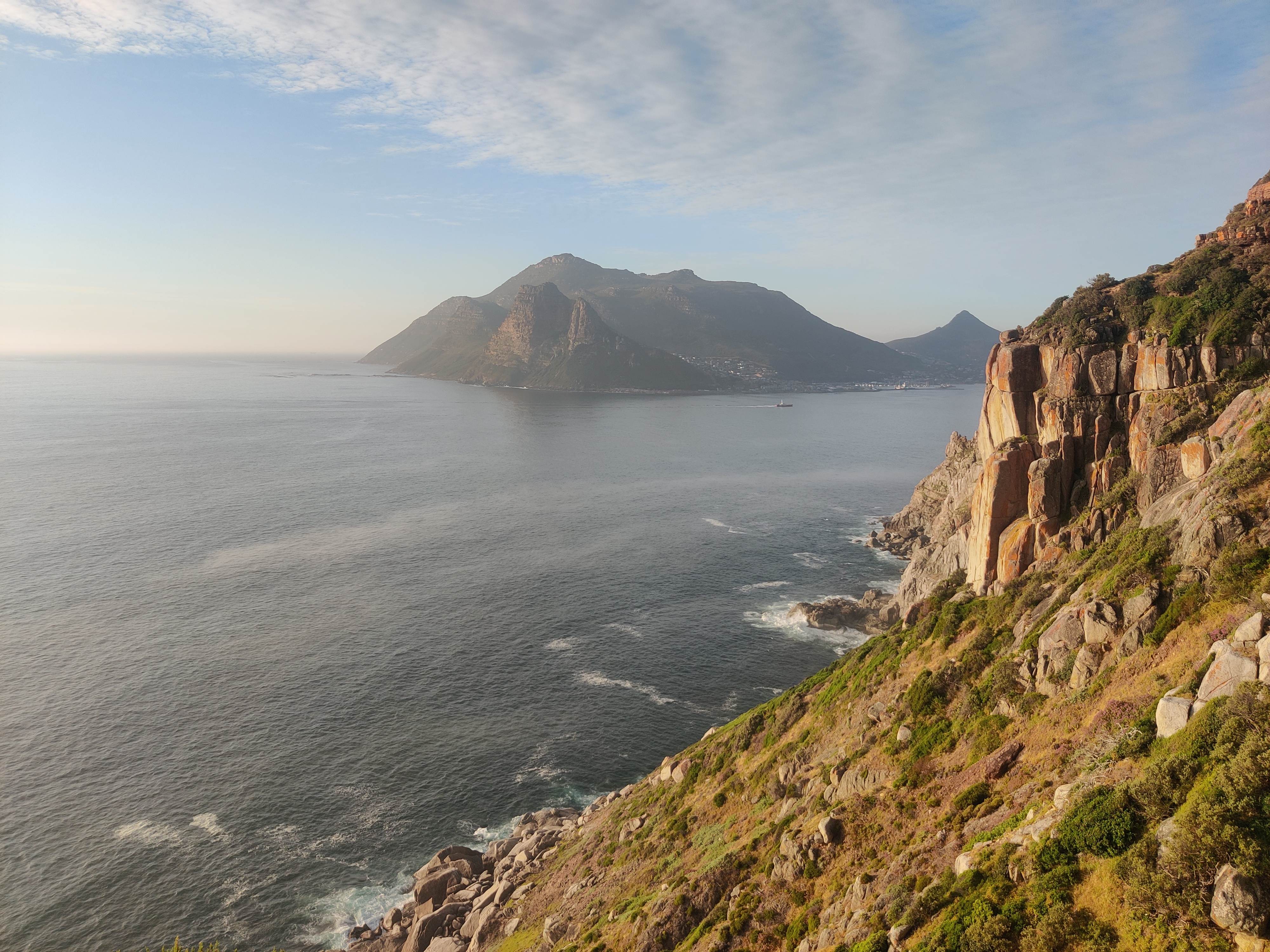
There’s a moment on Chapman’s Peak Drive, somewhere between Cape Town and Hout Bay, where the road curves along a cliff and the Atlantic just opens up in front of you. We pulled over, said absolutely nothing at all, and just watched the sunset. That’s South Africa for you. It doesn’t ease you in. It hits you with mountains, oceans, whales and history, sometimes all in the same afternoon.

South Africa Visa for Indians: What You Need to Know
Indian passport holders still need authorization to enter South Africa. What’s new is how you get it. South Africa has been rolling out a fully digital Electronic Travel Authorization (ETA). It was first piloted for travelers from India, China, Indonesia and Mexico, and officially launched more widely in August 2026. In practice, this means most Indian travellers can now apply for entry authorization entirely online.
However, when we travelled, while the ETA was still available, it was absolutely not workable. So, we had to take the traditional route of applying through VFS and getting a sticker visa instead. You can watch the video covering the full visa process, along with tips and FAQs, on our YouTube channel here.
A few things to remember whether you’re applying for ETA or Sticker visa:
- Apply through the official Department of Home Affairs ETA portal only. There’s a fair amount of noise online from agents and unofficial sites, so be careful.
- You’ll need your passport (valid for at least six months), a digital photograph, and detailed itinerary of your trip.
- South Africa is known for visa delays. So, apply well in advance, we’d recommend at least two months before departure, just in case.
- Because the ETA system is still expanding to more nationalities and categories, double check requirements closer to your travel date. Rules like these shift.
- For the sticker visa, you don’t need an appointment at VFS. Call ahead to check which days of the week they accept applications, then show up with your documents.
Getting to South Africa and Getting Around
There’s no direct flight from most Indian cities to Cape Town, so expect a layover. We flew in with a connection on Ethiopian Airlines.
Once you’re in the country, self-drive is genuinely the best way to experience it, especially for the coastal stretch of South Africa itinerary. Roads are well maintained, signage is clear, and driving on the left will feel familiar if you’re used to Indian roads. We rented a car for the Cape Town to Whale Coast leg of this South Africa itinerary, letting us stop wherever we wanted, which in South Africa is often, from an unplanned beach to a random viewpoint.
A few tips on the rental itself: book in advance, especially in peak season. Carry your Indian driving licence along with an International Driving Permit, most rental companies will ask for both. And always take the extra insurance cover, it’s worth the peace of mind.
For Johannesburg, cabs and ride-hailing apps like Uber and Bolt work well and are widely used by tourists.
Where to Stay
In Cape Town, base yourself in Camps Bay, Clifton or Sea Point. This stretch gives you beach mornings, mountain views, and an easy drive into the city centre. Camps Bay especially has that laid-back, palm-tree-lined promenade feel, with sunset drinks practically built into the evening routine.


Along the Whale Coast, you don’t have to base yourself in Hermanus town itself. We stayed in Pearly Beach, a small, out-of-the-way village further along the coast. And it gave us a much quieter, more local experience, right down to spotting a whale from our own deck. If you’d rather stay closer to the action, look for a stay in Hermanus.


In Johannesburg, Sandton is a good pick. You could also stay near the city center.


7-Day South Africa Itinerary
Day 1: Arrival in Cape Town
We landed in Cape Town, and settled into our stay. First stop, head to Camps Bay Beach. It’s postcard South Africa. White sand, the Twelve Apostles mountain range as backdrop, and a strip of restaurants right across the road for when you’re done. We walked it down all the way to Clifton Beach. The quieter, more sheltered by the rocks, and the kind of spot where you could genuinely lose an entire afternoon.
We very nearly lost more than an afternoon here. I left my phone behind at a bar near Clifton and only realized after we left. We rushed back, fully prepared for it to be gone. Instead, found the bar’s janitor standing there with it, looking for the owner. Faith in humanity was restored, right there in Clifton.
Day 2: Table Mountain, Lion’s Head and the V&A Waterfront
This is your big Cape Town sightseeing day, and it deserves a full one. We started early with Table Mountain, and took the cable car up. If you’re up for it, you can also hike up one of the trails. Mornings tend to have clearer skies and shorter queues. The tabletop views over the city and coastline are worth the early alarm. Spend a good amount of time here, there are many view points, pick a map at the entrance and just explore.

From there, head to Lion’s Head or Signal Hill. Lion’s Head is a proper hike with a bit of scrambling near the top, popular with locals doing sunrise or sunset climbs, while Signal Hill offers a more relaxed drive-up viewpoint. We reached Signal Hill just before sunset, and the whole vibe was something else. A lot of locals, just relaxing with a bottle of wine, some celebrating a birthday, some reading a book. Loved it.
Then, we drove to spend your evening at the V&A Waterfront. It’s touristy, sure, but it’s also genuinely lovely, with harbour views, seafood restaurants, and enough shopping and people-watching. While you’re there, carve out time for the African Trading Port, a shop right by the Waterfront packed with African art, textiles, jewelry and curios. It’s an easy way to bring a bit of the continent’s craft home with you.
Day 3: Cape Point, Boulders Beach and Chapman’s Peak Drive
Today, the drive itself will be half the point. Head down the peninsula towards Cape Point, where the Cape of Good Hope nature reserve gives you dramatic cliffs, wild coastline and a good chance of spotting baboons, ostriches and antelope along the way. The view just keep getting better. There is an entrance fee of INR 3,000 or $30. Drive up till the Cape of Good Hope and then head towards Cape Point. At Cape Point, make sure to take the Flying Dutchman Funicular up to the lighthouse. The view from the top of the entire cape is absolutely stunning.


On the way back, we stopped at Boulders Beach. This is where you’ll find a colony of African penguins waddling around on the sand, completely unbothered by the tourists. There is an entrance fee of INR 1,500 or $15. But, I’d say it was worth it. Just standing there, watching these lovely creatures, waddling, jumping into the ocean, dragging themselves back up was a delight.
Next, we headed to Muizenberg Beach for its famous rainbow-colored beach huts, popular with the surfing crowd. We went in mid-November and the water was still to chilly to get into. But, we did dare and take a short dip. And spent the better part of the evening just relaxing here.
Just before sunset, we drove back via Chapman’s Peak Drive, one of the most scenic coastal roads anywhere, with the sea on one side and sheer cliff on the other. There’s a small toll to drive it, and honestly, pay it without thinking twice. It is, without exaggeration, one of the most stunning stretches of road we’ve ever been on, all switchbacks and cliff edges and that endless blue on one side. Time it for sunset light, and you’ll cry by the end of it, for sure.
Day 4: Onward to the Whale Coast, via Kogel Bay
Check out of Cape Town and drive towards the Whale Coast, the gateway to the Garden Route. Break up the journey with a detour to Kogel Bay Beach. I happened to see this beach on Instagram and knew I had to go there. We shared the entire beach with just a small group of local girls having a picnic. The water is a startling shade of blue against the mountains, and the secluded, untouched feel of the place made it one of the most memorable stops of the whole trip.
One tip that would’ve saved us a lot of scrambling: take the stairs from the right side of the parking lot. We took the wrong route down and ended up having to wade through a stretch of boulders to reach the sand. Not the end of the world, but avoidable if you know which way to go.
We then, drove all the way to Cape Agulhas, the actual southernmost tip of the African continent and the official meeting point of the Atlantic and Indian Oceans. It’s a longer detour, but standing at the literal edge of a continent is the kind of thing I couldn’t skip over.

Instead of basing ourselves in Hermanus town itself, we stayed in Pearly Beach, a little further along the coast. It turned out to be one of the best decisions of the trip. The property we stayed at was wonderful, and we actually spotted a whale from our deck, no boat, no binoculars, just wine in hand and a whale breaching in the distance. Pearly Beach is tiny in the truest sense, the kind of place where everyone genuinely knows everyone. We ate dinner at the local brewery, Whale Coast Brewing Co., and it felt less like a restaurant meal and more like being folded into a family dinner. The owners were warm, generous with recommendations, and clearly proud of their little corner of the coast. It is moments like this that make this South Africa itinerary special.
Day 5: Whale Watching in Hermanus
We planned to leave Pearly Beach early to make it to Hermanus for whale watching, and realized we were almost out of petrol. In a town as small as Pearly Beach, nothing opens that early, and we didn’t want to risk getting further down the road and finding nothing along the way either. So we did the only thing we could: called the local convenience store, whose owners also run the petrol bunk, and asked if they’d open up a little earlier for us. And they did, without any fuss at all. It summed up exactly the kind of place this stretch of coast is. Wholesome doesn’t even cover it.
Hermanus itself is one of the best land-based whale watching spots in the world, and if you’re visiting between June and November, you’re in exactly the right window. Southern right whales come remarkably close to shore here, sometimes visible right from the Cliff Path that runs along the coastline.
Book a whale watching trip and enjoy your morning watching whales breach and freaking out over their sheer size. We saw many Southern right whales, including a baby that was born a few weeks ago. Whales are fascinating creatures, they travel to this part of the World to give birth and so there are high chances of you seeing a mother-child duo.
Tip: If you get sea sick like me, make sure to take a medicine before you board.
Once we came back, we spent time exploring Hermanus itself, it is a super lively town, walking sections of the Cliff Path, and the afternoon at Grotto Beach, which has a wide, quiet stretch of sand that feels a world away from Cape Town’s busier beaches.
Day 6: Bo-Kaap and the Flight to Johannesburg
Drive back to Cape Town, and use your last few hours in the city for the Bo-Kaap neighbourhood. Its rows of brightly colored houses on cobbled, steep streets make for one of the most photographed corners of the city, and the area’s Cape Malay history gives it a completely different texture from the coastal stretches you’ve spent the week in. Take a walking tour to understand the cultural significance or visit the Iziko Bo-Kaap museum.


Catch your evening flight to Johannesburg, and settle in for your last day in the country.
Day 7: Soweto, the Apartheid Museum and Maboneng
Johannesburg deserves at least this one full day on your South Africa itinerary, and it’s a completely different vibe from the one you’ve just spent a week in. One thing to plan around: if your day in the city happens to fall on a Monday, keep in mind that most attractions, including several museums, are closed.
We started with a Soweto walking tour, walking through Vilakazi Street, home at different times to both Nelson Mandela and Desmond Tutu, and got a sense of the township’s role in the country’s history and its ongoing, vibrant present. This is also where we were introduced to kota, a hollowed-out loaf of bread piled with fillings, a proper local street food institution. Do yourself a favor and get the one with fries stuffed inside. It sounds excessive. It is not.


Follow this with the Apartheid Museum. Give it real time. It’s one of those museums that reframes everything you’ve been casually enjoying all week.
Wind down at Maboneng Precinct, a regenerated arts and culture district full of galleries, rooftop bars and independent cafes. It’s a good, low-key way to close out the trip before you fly home.
For shopping, Art Africa is the spot, a great source for African art, sculpture and curios if you didn’t already stock up at the African Trading Port in Cape Town.
Is This the Full Garden Route?
This itinerary gives you the start of the Garden Route experience through Hermanus, but the classic Garden Route continues much further east, through towns like Mossel Bay, Knysna and Plettenberg Bay, all the way to Port Elizabeth. If you have more than a week, extending the coastal drive beyond Hermanus is absolutely worth it, with more beaches, forest canopy walks and small-town charm along the way. We kept our version tighter to fit seven days without feeling rushed, but consider it an easy add-on for a future trip.
Practical Tips for South Africa
- Currency: The South African Rand (ZAR). Cards are widely accepted in cities, but carry some cash for smaller towns like Hermanus.
- Best time for whale watching: June to November, with peak sightings usually around September and October.
- Driving: South Africa drives on the left, and self-driving the coastal stretch is genuinely one of the highlights of the trip, not just a way to get around.
- Time: Most shops and restaurants close early, so plan your day accordingly.
- Safety: Cape Town’s tourist areas and the Garden Route are generally safe and well set up for visitors. Johannesburg needs a bit more street sense, especially after dark; stick to well-known areas like Maboneng and avoid wandering unfamiliar streets alone.
- Layers: Weather can shift quickly, especially near the coast and up on Table Mountain. Pack layers even if your travel dates fall in the warmer months.
Frequently Asked Questions (FAQ)
Is one week enough for a South Africa itinerary?
Yes, a one week South Africa itinerary works well if you focus on one region plus a short add-on, the way we did with Cape Town, the start of the Garden Route around Hermanus, and a day in Johannesburg. You won’t see everything the country offers, but you’ll get a real feel for its coastline, wildlife and history without feeling rushed. If you want to cover more of the Garden Route itself, budget closer to ten days.
Do Indians need a visa for South Africa?
Yes. Indian passport holders need entry authorization to visit South Africa; it isn’t a visa-free destination. What’s changed is the process: instead of the older paper-based visa application, most Indian travelers can now apply through South Africa’s digital Electronic Travel Authorization (ETA) system, applying entirely online through the official Department of Home Affairs portal.
What is the Garden Route and does this itinerary cover it?
The Garden Route is South Africa’s famous coastal stretch running east from around the Western Cape through towns like Hermanus, Mossel Bay, Knysna and Plettenberg Bay. This one-week South Africa itinerary covers the starting stretch of the Garden Route through Hermanus and the Whale Coast; if you have more time, extending further east is well worth it.
When is the best time to visit South Africa for whale watching?
June to November is whale watching season along the Garden Route and Whale Coast, with sightings often peaking around September and October. Southern right whales come close enough to shore that you can spot them from cliff paths, beaches, and in our case, from a property deck.
Is it safe to self-drive in South Africa?
For the Cape Town and Garden Route stretch, yes, self-driving is genuinely one of the best ways to see the country, with well-maintained roads and clear signage. Stick to daylight driving on unfamiliar coastal roads, take the extra rental insurance, and carry an International Driving Permit along with your Indian licence. Johannesburg calls for a bit more caution generally, and sticking to well-known, well-lit areas is a good rule of thumb.
Seven days, three very different sides of South Africa, and honestly, we came back already planning the version of this trip that goes further down the Garden Route. If you only have a week, this South Africa itinerary gives you the mountains, the ocean, the whales and the history, and leaves you wanting exactly enough more to come back for.


Leave a Reply