
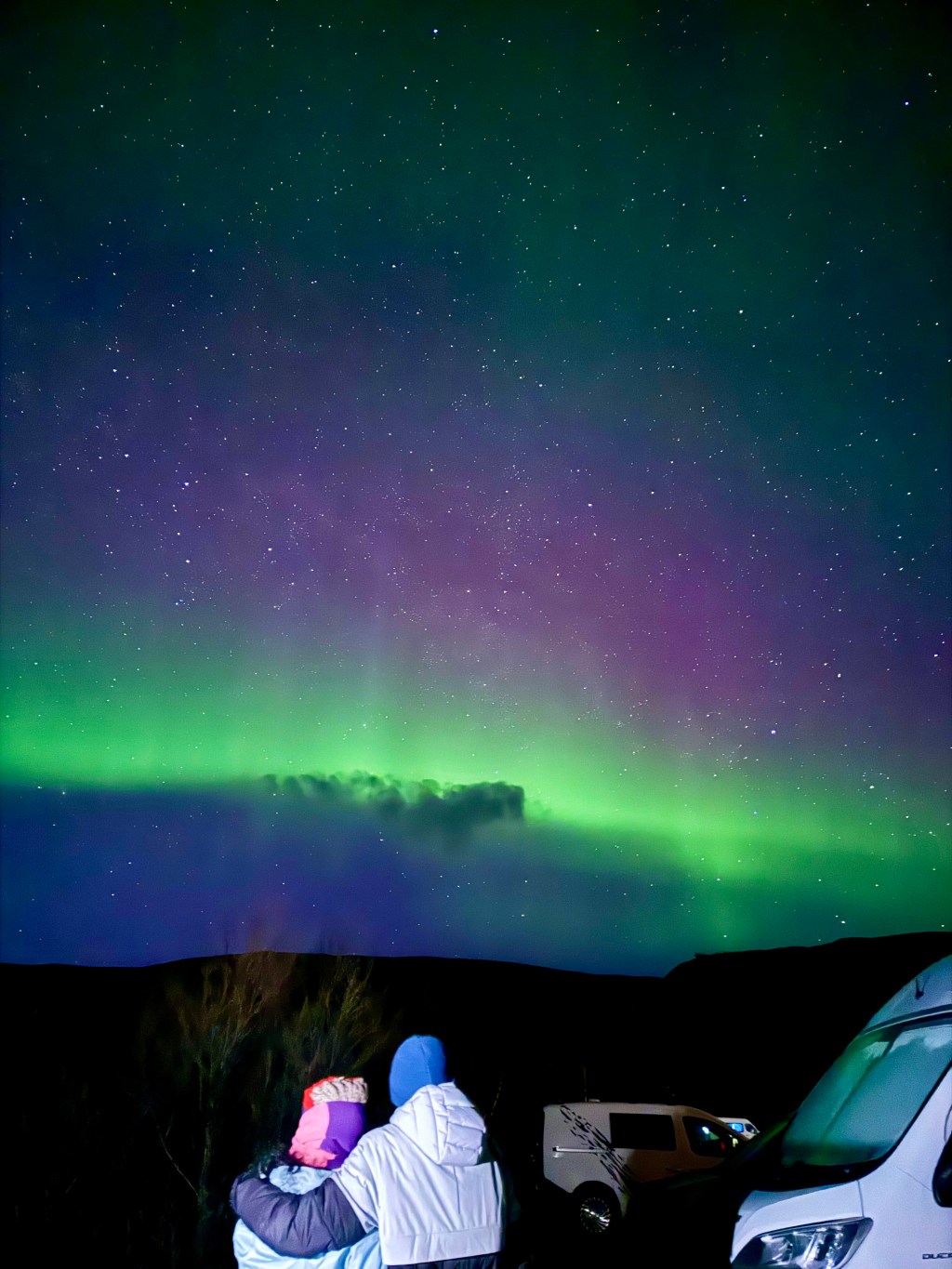
There are few things more humbling than standing under a night sky that suddenly bursts into green, pink, and violet ribbons of light. The Northern Lights, or Aurora Borealis, aren’t just a natural phenomenon; they’re an experience that moves you in ways words can barely describe.
And here’s the exciting part: 2025 and 2026 are predicted to be the best years in over a decade to see them.
If Iceland has ever been on your list, this is the time to go. And so we penned a detailed, no-nonsense guide to help you plan your Northern Lights trip, when to go, where to stay, what to expect, and how to make sure you have the best chance to witness the magic.
Why 2025-2026 Is Special
Every 11 years, the Sun hits a solar maximum, a period when solar activity is at its peak. More sunspots and solar flares mean more charged particles reaching Earth’s atmosphere, which in turn means stronger, brighter, and more frequent auroras. We’re currently entering that peak, and forecasts suggest 2025 and early 2026 will be particularly active. In simple terms: you’ll have a much higher chance of seeing Northern Lights dance across Iceland’s skies in these years.
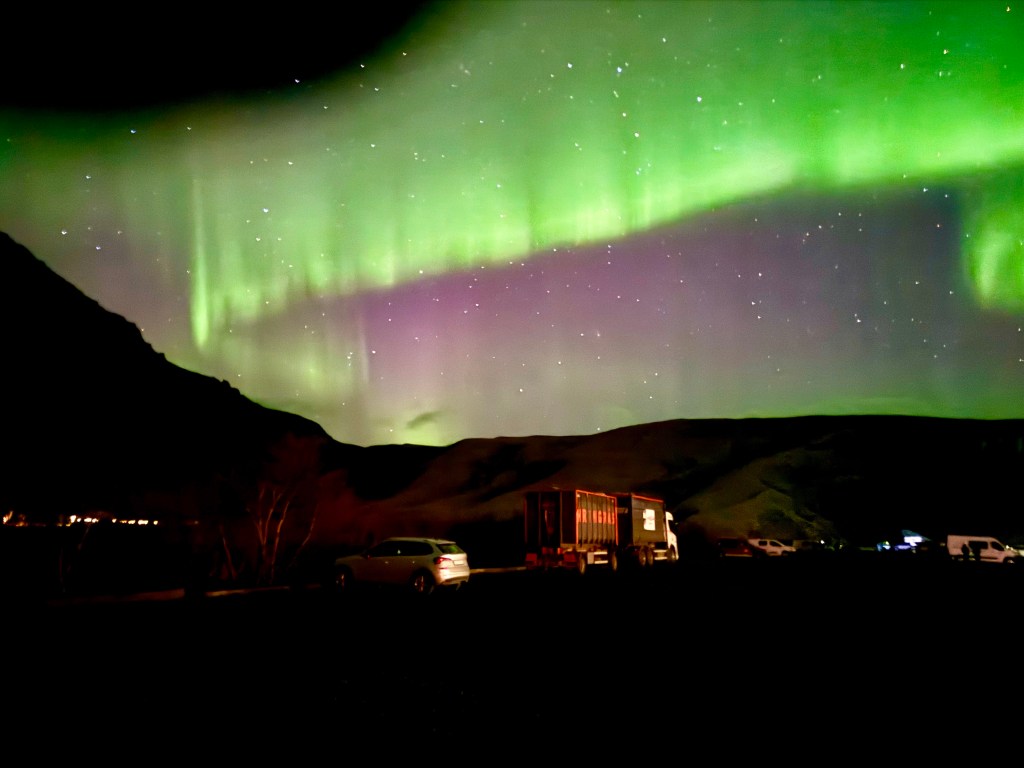
Best Time to See the Northern Lights in Iceland
While auroras can appear anytime from late August to mid-April, not all months are equal. The secret is darkness, the more hours of night, the better your chances.
September to October
- Mild weather, fewer crowds.
- Longer nights begin, a great balance of daylight for sightseeing and darkness for auroras.
November to January
- Deep winter darkness = longest aurora windows.
- The sky is often clearest in late December and January.
- Cons: short daylight hours (4–5 hours), so limited daytime sightseeing.
February to April
- Still dark enough for auroras, but the weather starts improving.
- March equinox is a strong period for solar activity.
- Cons: the skies may not be very clear.
Best Places in Iceland to See the Northern Lights
1. Thingvellir National Park
Just 45 minutes from Reykjavík, Thingvellir offers wide open skies, away from city lights and a historic backdrop. It’s also part of the Golden Circle, perfect if you want to combine sightseeing and aurora chasing. There are many stays and campsites in the area.
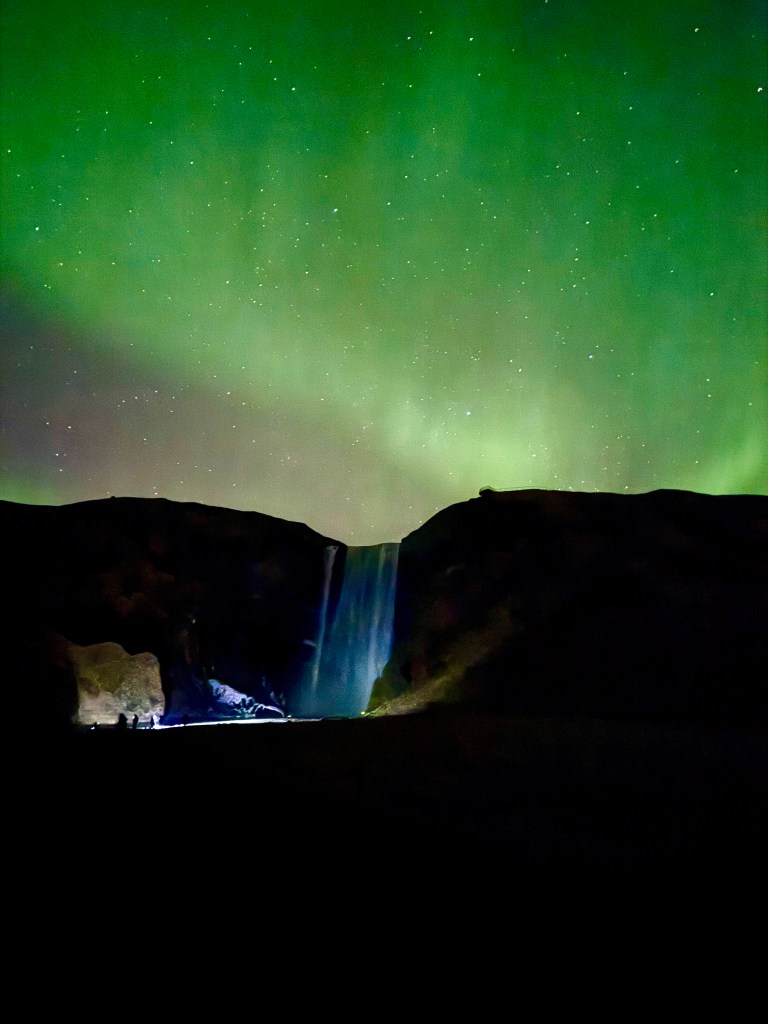
2. Skógafoss
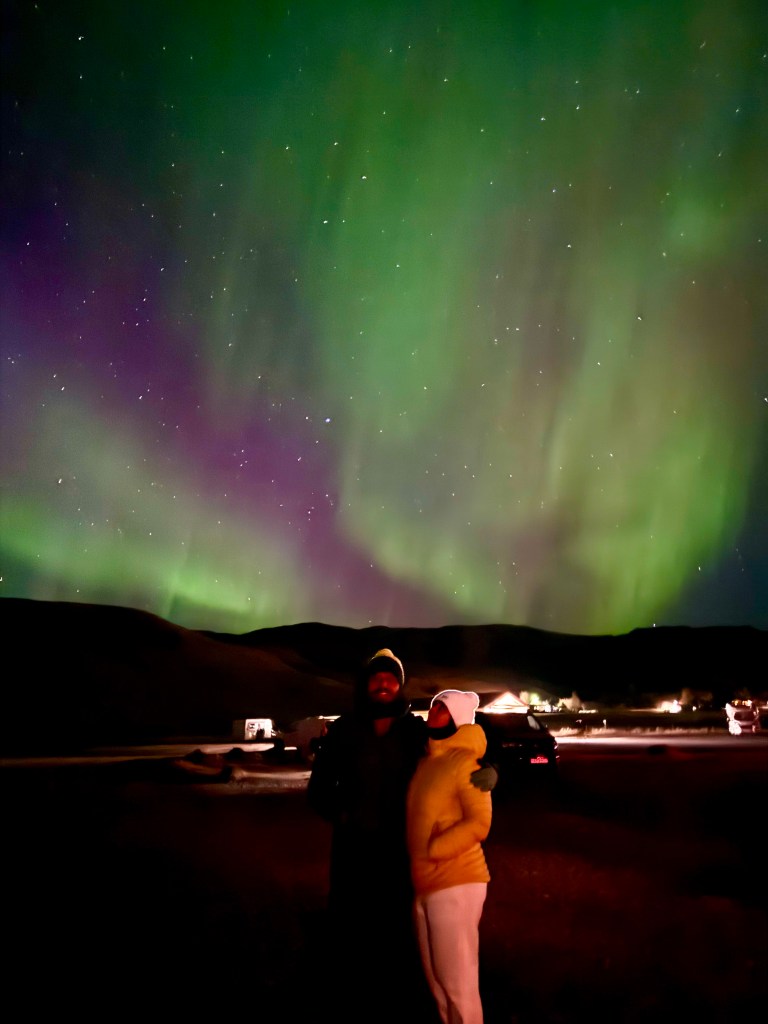
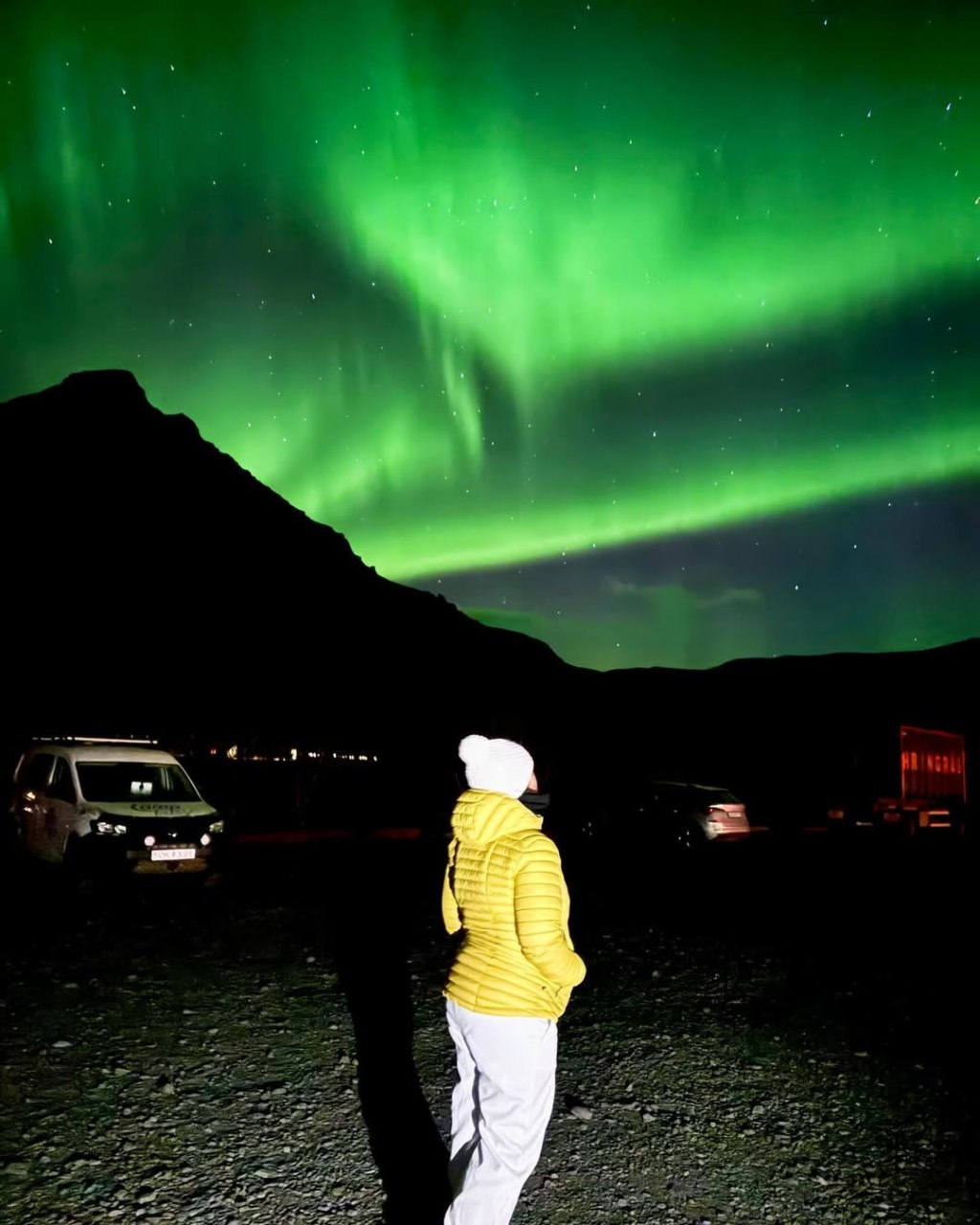
This is where we saw the best aurora of our trip, which lasted through the night. The aurora dancing across the sky with the majestic Skógafoss in the backdrop is a sight we’ll never forget.
3. Vestrahorn
Very little light pollution and very few tourists spend the night in the area. Imagine black sand beach, rolling dunes, towering mountains and the sky lit up in shades of green.
4. Snæfellsnes Peninsula
Often called “Mini Iceland,” this region gives you cliffs, volcanoes, beaches, and glaciers, with far less light pollution. The reflections of the aurora over Kirkjufell or Búðakirkja will be unforgettable.
5. Jökulsárlón Glacier Lagoon & Diamond Beach
Watch the lights reflect off floating icebergs and black sand. It’s one of the most photogenic aurora spots in the world, but bring layers; it gets freezing near the lagoon.
6. North Iceland (Akureyri, Mývatn, Húsavík)
Clear skies, less cloud cover, and very little artificial light. Whale watching by day and auroras by night, perfect combination.
How to Plan Your Aurora Trip
Duration
Give yourself at least 5 to 7 nights. Weather can change quickly, and having multiple nights increases your odds.
Base Yourself Smartly
Instead of staying in one place, divide your nights between regions. For example:
- 3 nights on the South Coast (for Skógafoss, Jökulsárlón or Vík)
- 1 night in Snæfellsnes
- 1 nights near Reykjavík as a backup for the final night

Getting Around
Driving gives you freedom to chase clear skies. We rented a Hilux 4×4 from Rent.is, easily one of the best decisions we made. Spacious enough for four people, perfect for sleeping and driving. But be warned: the Hilux is big and can get swayed by strong Icelandic winds. Only attempt long winter drives if you’re confident behind the wheel.
If driving in winter feels intimidating, you can also join a Northern Lights tour that tracks forecasts and adjusts routes nightly. Arctic Adventures offers flexible options with rebooking guarantees.
Apps/Websites to Check
- Check real-time cloud forecasts on Vedur.is to make sure the sky is clear
- Download My Aurora Forecast app. Look for a KP index of 3 or higher.
- Look up online for Live Webcams monitoring for Northern Lights and keep an eye on them
What to Pack for Aurora Season
The key to enjoying Iceland in winter is layering. The cold can be brutal, and winds are often stronger than they look, and when you are someone like me (Shwetha) who falls sick at the whip of air, it is important to layer up.
Essentials
- Base layer: Thermal tops and leggings (merino wool recommended).
- Mid layer: Fleece or insulated jacket.
- Outer layer: Waterproof, windproof shell.
- Footwear: Waterproof hiking boots with good grip and woollen socks.
- Accessories: Gloves, beanie, and a scarf or buff to protect your face from wind.
- Torch or Headlamp: Preferably with a red light to preserve night vision.
Pro tip: Keep air activated heat packs and a thermos flask for late-night aurora watching, it can take hours, be patient, because it’s worth every minute.
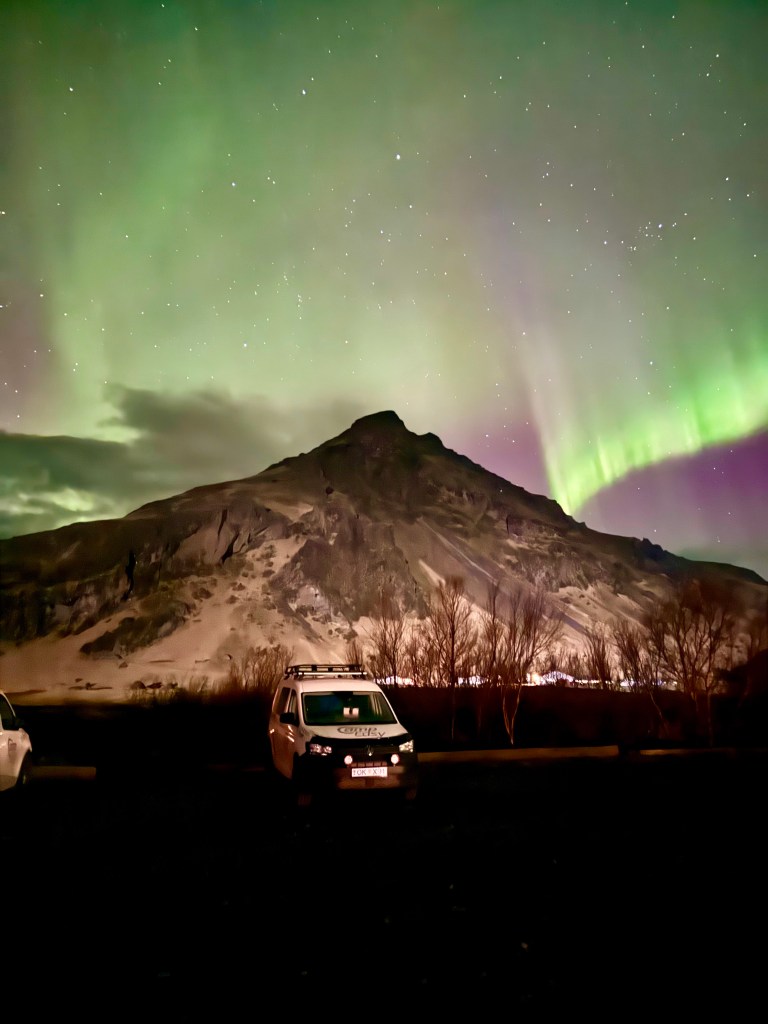
Photographing the Northern Lights
Even if you’re not a pro photographer, you can capture the aurora beautifully with a few basics:
- Tripod: Essential for long exposures (A flimsy one won’t work due to the winds).
- Camera settings: ISO 800–3200, aperture f/2.8 or lower, shutter 5–15 seconds.
- Manual focus: Set to infinity before dark.
- Shoot in RAW: Gives more editing flexibility.
- Avoid flashlights: Use red light mode to protect your night vision.
For phone photography, apps like Northern Lights Camera or ProCam allow manual settings on iPhones and Androids.
What to Expect & Watch Out For
- Weather changes fast. Cloud cover can move in within minutes, be flexible.
- Be patient. Some nights the KP index maybe high and yet you may not be lucky.
- Hold car doors in the wind. Gusts can easily bend them.
- Avoid icy roads if inexperienced. Black ice and snow drifts (snow snakes) are common.
- Respect local warnings. Never walk onto icy lakes or into closed areas, even for a photo.
Staying Overnight: Aurora-Friendly Stays
Many rural hotels and guesthouses offer aurora wake-up calls, meaning staff will alert you if the lights appear.
Some favorites to consider:
- Land Hotel: Uninterrupted views of the night sky without any light pollution.
- Hotel Rangá (South Iceland): Famous for its aurora observatory.
- Fosshotel Glacier Lagoon: Between Skaftafell and Jökulsárlón.
- Fosshotel Hellnar: On Snæfellsnes Peninsula, with ocean views.

FAQ: Northern Lights in Iceland
Is Iceland the best place to see the Northern Lights?
One of the best. Its high latitude, low light pollution, and easy access make Iceland one of the best aurora destinations in the world.
Do I need to drive far north?
No, you can often see auroras even near Reykjavík on strong nights. But darker, rural locations offer the best views.
What’s the best time of night?
Typically between 10:00 pm and 3:00 am, though activity can begin earlier or continue later.
Can I see them every night?
Not always. Aurora visibility depends on both solar activity and clear skies. Give yourself multiple nights for the best chance. Download the apps suggested above and look for KP index above 3.
Aurora chasing is unlike any other travel experience, it’s unpredictable, freezing, and sometimes exhausting, but the moment the sky comes alive, it’s pure magic. With solar activity peaking in 2025 – 2026, your odds of seeing the Northern Lights in Iceland are higher than they’ve been in years. Plan well, pack smart, stay patient, and when the moment arrives, remember to put your camera down for a second and just look up.
 Winding Roads & Pages
Leave a comment