There are a few places that we’ve both had on our list for a while. One of those places was Bhutan. We were in college when we started planning this trip. We were certain of making it happen before life took over. So, while most people planned their graduation trip to Goa, we planned our trip to Bhutan. And trust me, it was the best decision we’ve made.
The planning for this for long and drawn out, filled with surprises due to flight cancellations. But, here’s a detailed blog that contains everything that you need to plan a fulfilling and slightly offbeat trip to Bhutan.
Trip Details:
Places Covered: Phuentsholing, Thimphu, Paro, Ha Valley, Punakha, Phobjhika
No. of Days: 8-9 days
Cost: INR 20,000 only (Excluding flight tickets and daily Sustainable Development Fee)
- Food – 13%
- Transport – 22%
- Stay – 26%
- Misc (Includes entry tickets, shopping, tips) – 9%
Visa and Sustainable Development Fee:
Indian nationals don’t require a visa to visit Bhutan. Your Passport/Voter ID card/Birth Certificate for children below the age of 18 years is sufficient to get an entry permit.
Please read up the rules carefully before you plan your trip. They tend to change from time to time. During our visit, Indians did not have to pay SDF or Green tax. However, that has been added now for Indians as well.
- An SDF of Rs. 1,200 per day per tourist is required to be paid at the border for Indians. This fee is $100 for other nationals. Children aged 5 years and below are exempted of SDF and children between the age of 6-12 years are given 50 % concession on SDF.
- A Green Tax of Rs. 4,500 per day per vehicle will be levied if you wish to travel in an Indian registered car to Bhutan
- The border check-post at Jaigaon – Phuentsholing is open 24*7. However, things tend to get slow later in the day. Plan to reach early and sort the formalities out. You will be required to be present in person with a passport photograph, your ID, documents, the entry form (available at the check-post) and make a payment in cash at the counter. Indian currency is accepted here.
Trip Details:
Day 0 – Guwahati
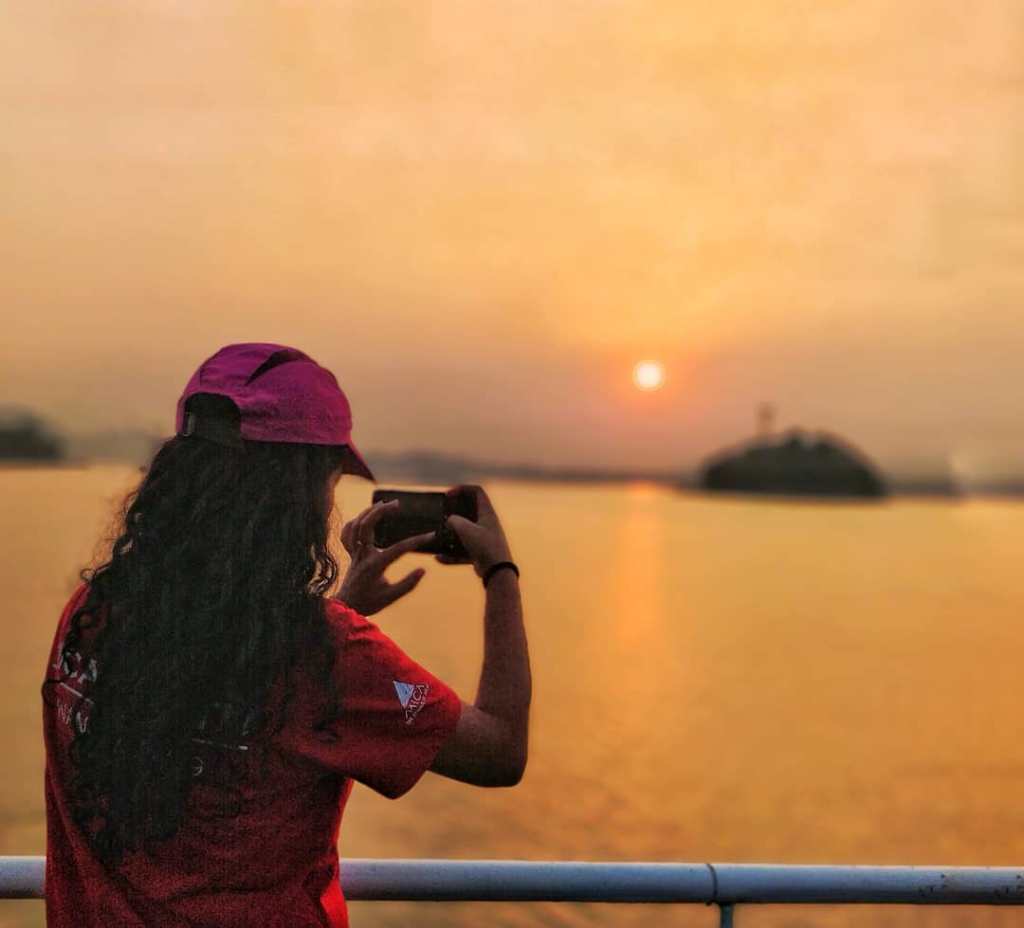
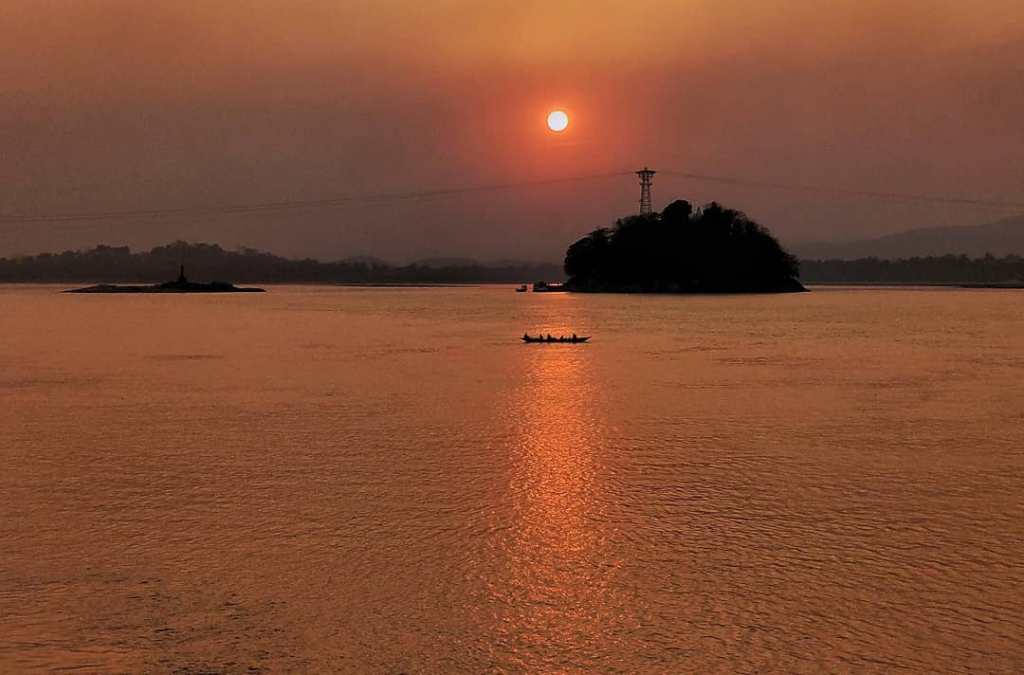
We had planned to fly to Bagdogra and then take a short drive to Jaigaon. However, our flight was cancelled and we were rescheduled on a flight to Guwahati. So, we had to replan the entire trip. We landed in Guwahati around noon. Spent the entire day exploring the food scene and bazaars of Guwahati. We also took a sunset cruise on the Brahmaputra. We boarded the Alfresco Grand boat near Uzan Bazaar. A decent sunset ride, with food and drinks, it was a good start to the trip.
After a sumptuous dinner, we made our way to the Guwahati railway station to catch an overnight train to the Bhutan border. It was a 2S train from Guwahati to New Alipurduar. It was not a pleasant ride to say the least. Let’s leave it at that. The Bhutan border is 1 hour away from this station, you can take an auto to get here.
💡Alternatives
1. You can fly to Bagdogra —> Then take a 5hr train to Hasimara and a 20 minutes auto to the Jaigaon border
2. You can fly to Bagdogra —> Then take a 4hr cab to the Jaigaon border
3. You can fly directly to Paro —> Then cover the trip in reverse
Day 1 – Phuentsholing
We reached the border town of Jaigaon early in the morning. It is a chaotic town, filled with tour operators and cab drivers, offering their services to you. This is where we found our driver and negotiated really hard for his services for the entire duration of the trip. Back when we visited, there was no Green Tax and hence it made sense to take a cab from the Indian side. However, given that the Green Tax can be a significant cost now, you can cross the border at the Bhutan Gate and look for similar drivers on the Bhutan side.
The first thing you’ll notice when you cross the border is silence. It was so profound that everyone in our group instantly lit up. People don’t honk in Bhutan, and it will honestly make you smile.
The immigration office is right after you cross over and it is usually crowded. Make sure that you reach earlier in the morning. You will find many people trying to sell their services to help you fill out the form and submit the documents. Honestly, you won’t need help, it is pretty straight forward. At the entrance, you will get a form that you need to fill out with your details and your travel plan. Make sure to carry your ID and a passport size photo. The entire process should not take more than an hour. You can also buy a local SIM right at the immigration office.
We had a hearty breakfast in this lovely town, freshened up and started our journey towards Thimphu, the capital of Bhutan.
💡You can also visit the monastery ‘Zangtopelri’ which has a life statue of Guru Rinpoche in Phuentsholing
The drive from Phuentsholing to Thimphu is so stunning with beautiful curvy roads, mountains on one side and valley on the other. The river Wang Chu will keep you company throughout, adding to the drama. It’ll blow your mind. We had multiple stops along the way to click pictures. Everything looks so picturesque. The drive will take close to 5 hours, more if you stop as much as we did.
We reached our hotel, around dinner time, and went out for a walk to grab some dinner and retired early. We visited in March and the weather was so pleasant.
Day 2 – Thimphu
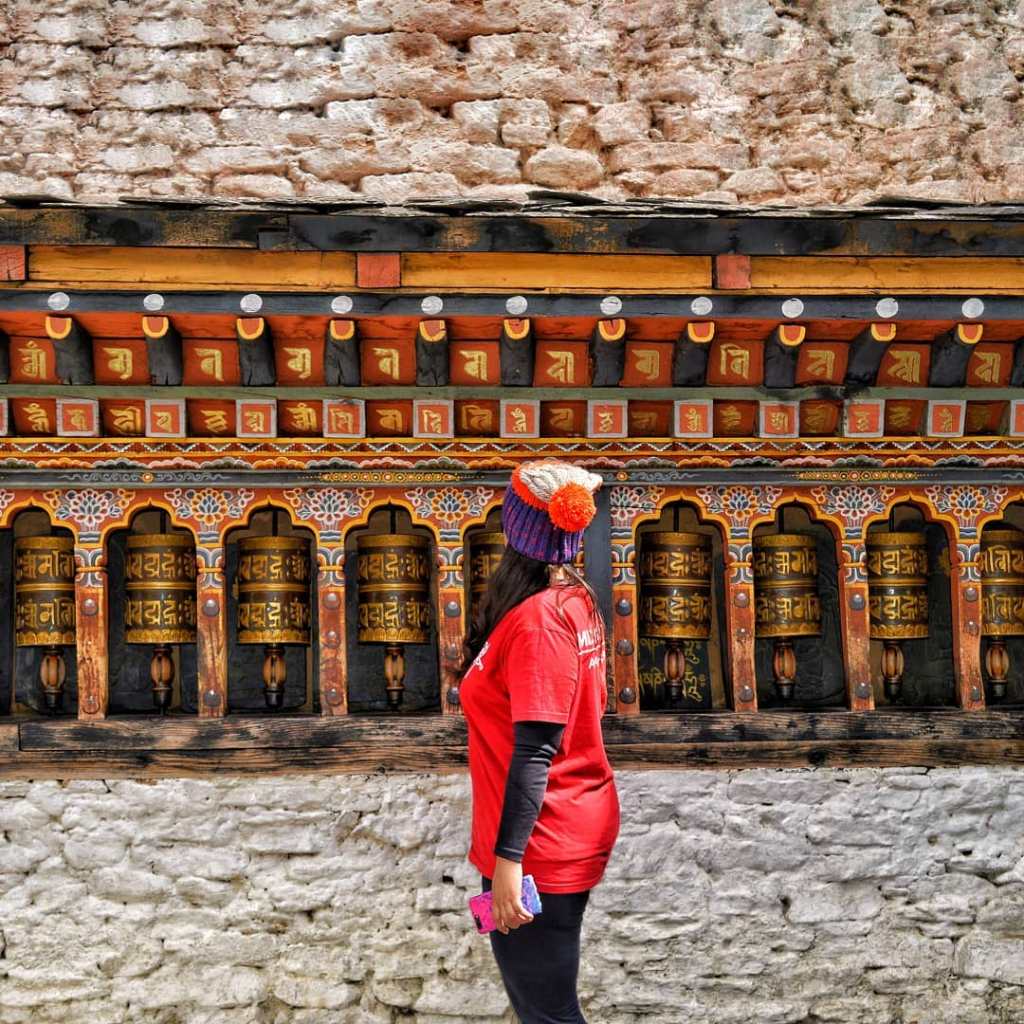
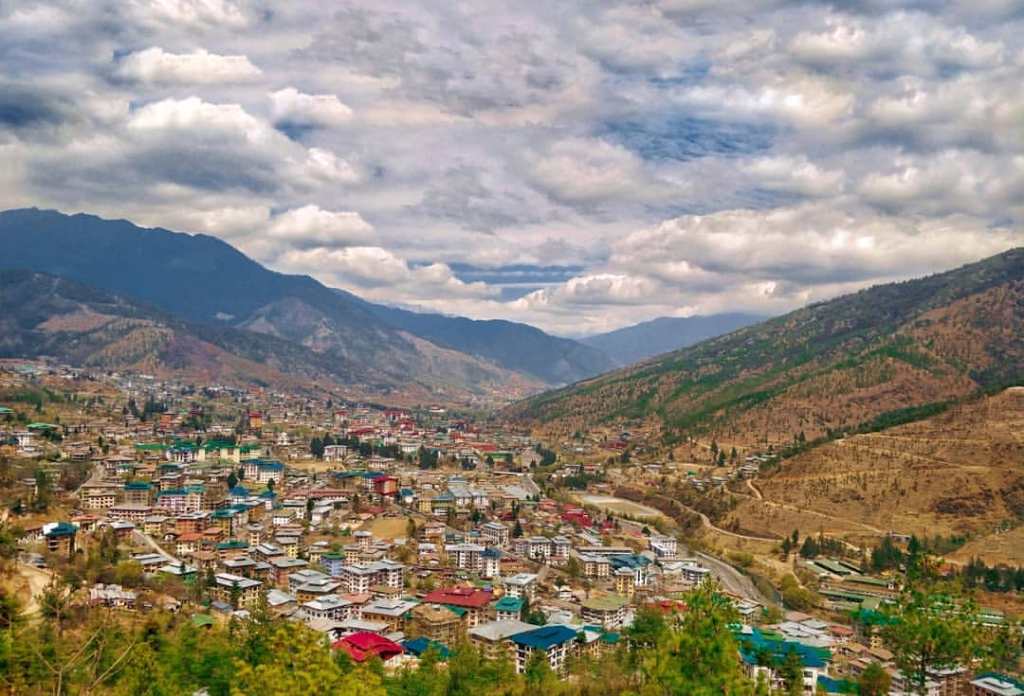
We began our day today early on after a hearty breakfast at our stay. We had a packed day exploring the stunning capital of this land-locked country. Our day began at the Memorial Chorten, a Stupa built in 1972. This one is special since it is one of the few Stupas that does not house human remains inside it. When you walk around this beautiful Stupa, what strikes you the most is the silence, the quiet, the harmony. There are no traffic signal in Bhutan and yet no one feels the need to honk. There are dedicated crosswalks and yet pedestrians always get right of way. What strikes you even more is how hard the Bhutanese preserve their culture, their nature, painstakingly so and it makes you smile, and hope.
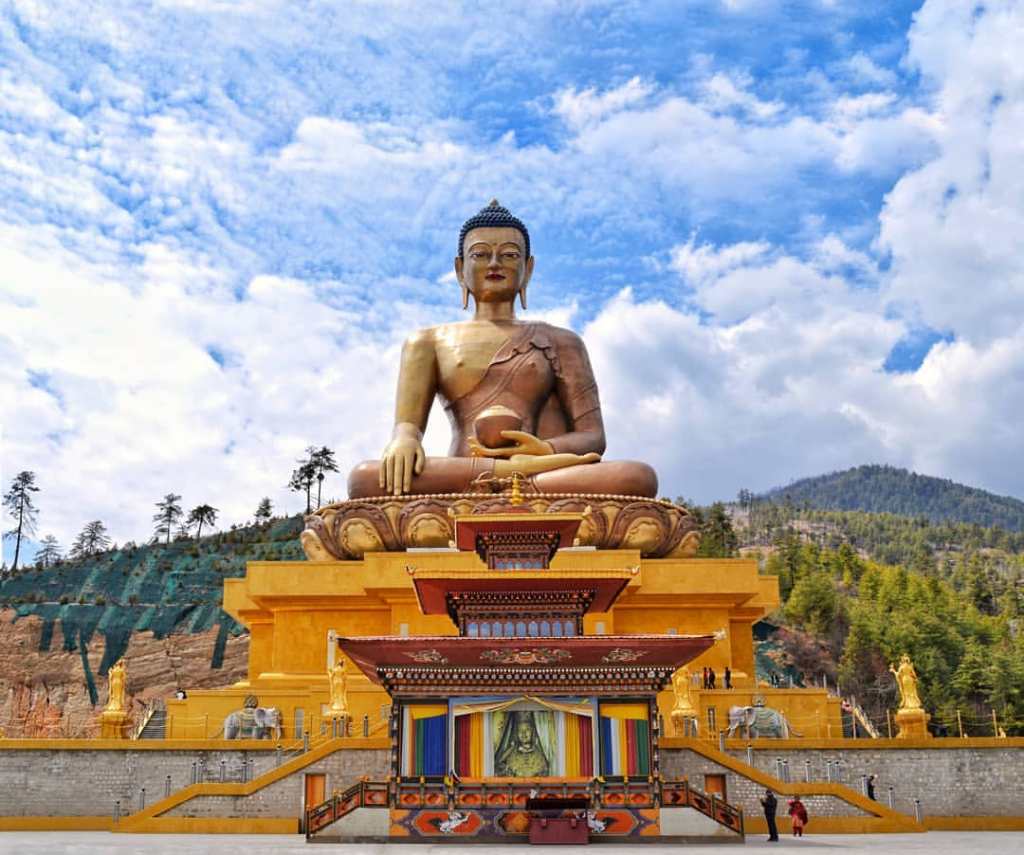
We then moved on to Buddha Dordenma, 177 feet statue of Buddha, with a bunch of Bodhisattva statues surrounding it. This statue was built to fulfil a prophecy, that this statue will bring peace and harmony to the world. Not sure about the world, but when you get here, you are certainly happy and peaceful. The view, the breeze, the quiet, just sit down in a corner and spend a few minutes admiring the human-nature relationship.
Next stop, Changangkha Lhakhang, the oldest temple complex of Bhutan, perched on top of a ridge, overlooking the city. This beautiful temple is really peaceful and is considered to be the house of the protector of children of Thimphu. We spent our afternoon here, just lazing by the garden, saying hello to all the kids visiting the temple on their way home from school.
Last stop, Tashichho Dzong, the fortress that houses the office of the King, the secretariat and other officials. We reached there just in time to view the flag down ceremony. You can stay late to witness the stunning building after it lights up.
After a packed day, we spent the evening relaxing at Clock Tower Square. You can just by the square and observe locals go on about their lives, chat them up. On most days, people perform in the square as well. There are plenty of restaurants around the square to try local Bhutanese cuisine.
Day 3 – Paro
We checkout out of our hotel and started on our way to Paro. It really helps to have a car of your own since public transport is unreliable in Bhutan. Enroute Paro, you are again going to stop in multiple picturesque locations and you are not going to want to leave. Everything looks like it jumped straight out of a painting. It’s unreal. The journey will take 2 hours.
The first stop for the day, Paro Airport, known as one of the most dangerous airports in the World. This is because the pilots don’t have sight of the runway until the last minute since they have to manoeuvre the aircraft through multiple sharp turns to get there. Plus, the runway is incredibly short. Hence, pilots need a special license (training) to land here. You can view the runway from the roadside and it is extremely thrilling to watch the plane being manoeuvred so craftily.
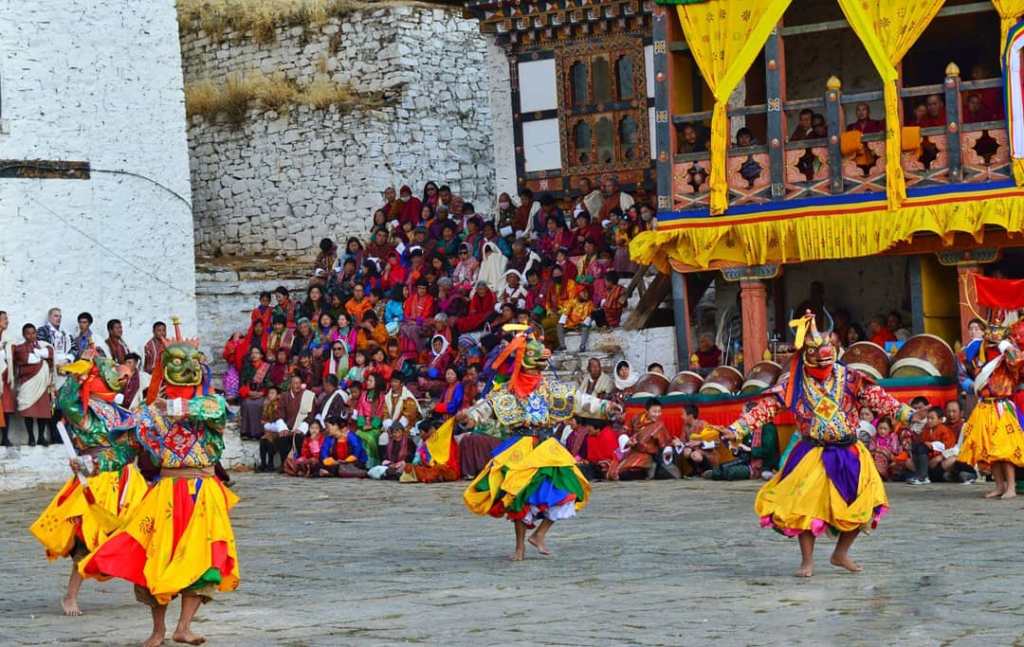
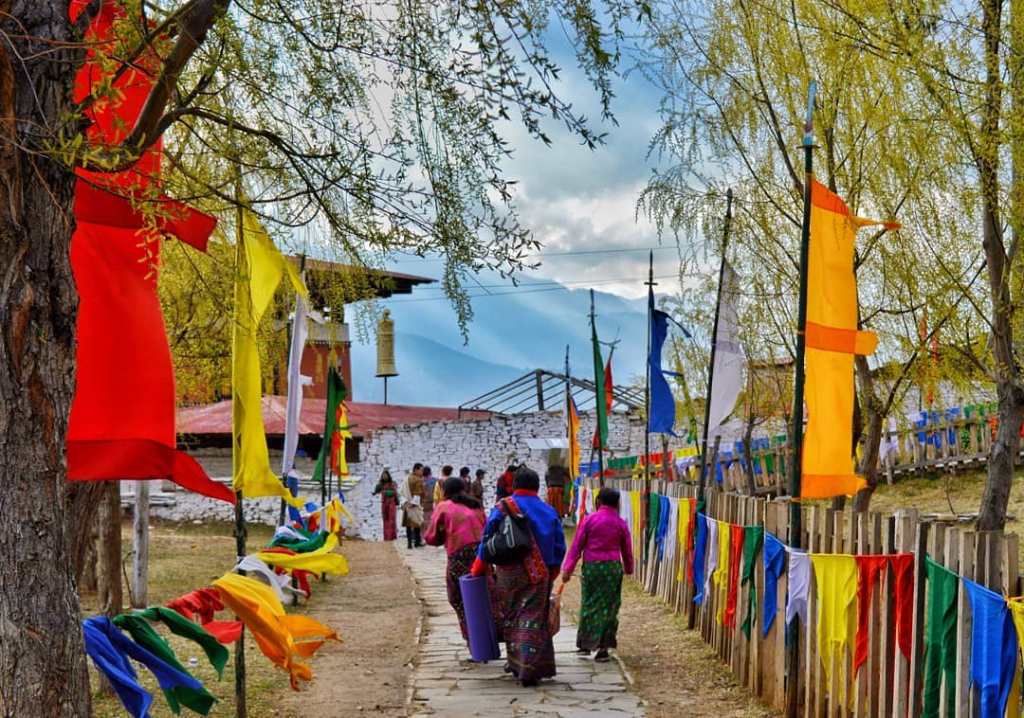
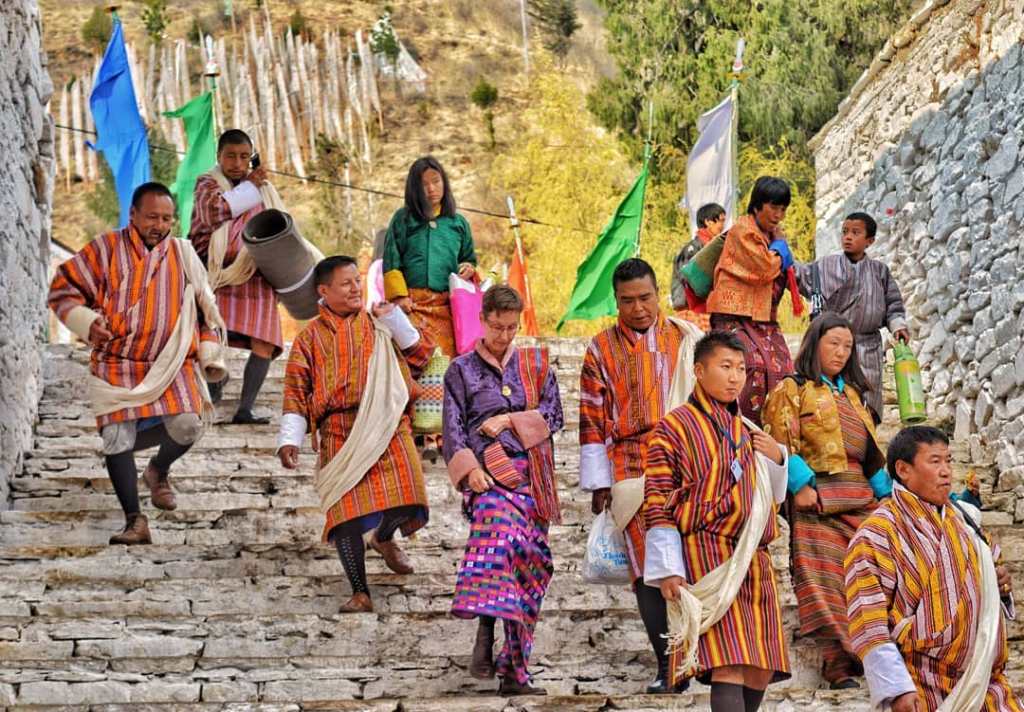
We then checked into our hotel and as luck would have it, we were right on time to witness the last day of the Paro Tsechu or the Paro festival. We were overjoyed and rushed to the Rinpung Dzong, where the festivities were taking place. The entire town had gathered to witness the beautiful performances in memory of Guru Rinpoche. The colourful masks, the traditional attires, the music, it was totally worth it. The Dzong itself is one of the oldest, filled with ancient murals that have survived the test of time.
Last stop, National Museum, which has multiple galleries, extensive collection of art and cultural heritage preserved through the times. We truly enjoyed taking a walk down memory lane. The view from the top of Paro is stunning as well.
Paro is one of those places that will make you want to stay, just a bit longer. The air is fresh, the colours are vibrant, the life is unhurried. You would just want to sit and admire her, just a bit longer.
Day 4 – Tiger’s Nest or Taktsang Monastery
We started the day very early since we wanted to get a head-start on the climb upto Tiger’s Nest, one of the most recognised places associated with Bhutan. Guru Rinpoche, who introduced Buddhism to Bhutan, is said to have meditated in a cave up here. It is also believed that he rode up here on the back of fierce Tigress and hence the name, Tiger’s Nest.
The hike up is decently easy, however, it can get pretty slippery if it starts to rain. You gain a lot of altitude and hence it is important to take breaks while climbing. You generally don’t need a guide, but feel free to book the services of one at the start of the trail. The hike could take anywhere between 3 hours to 5 hours both ways plus close to an hour of the Monastery tour at the top.
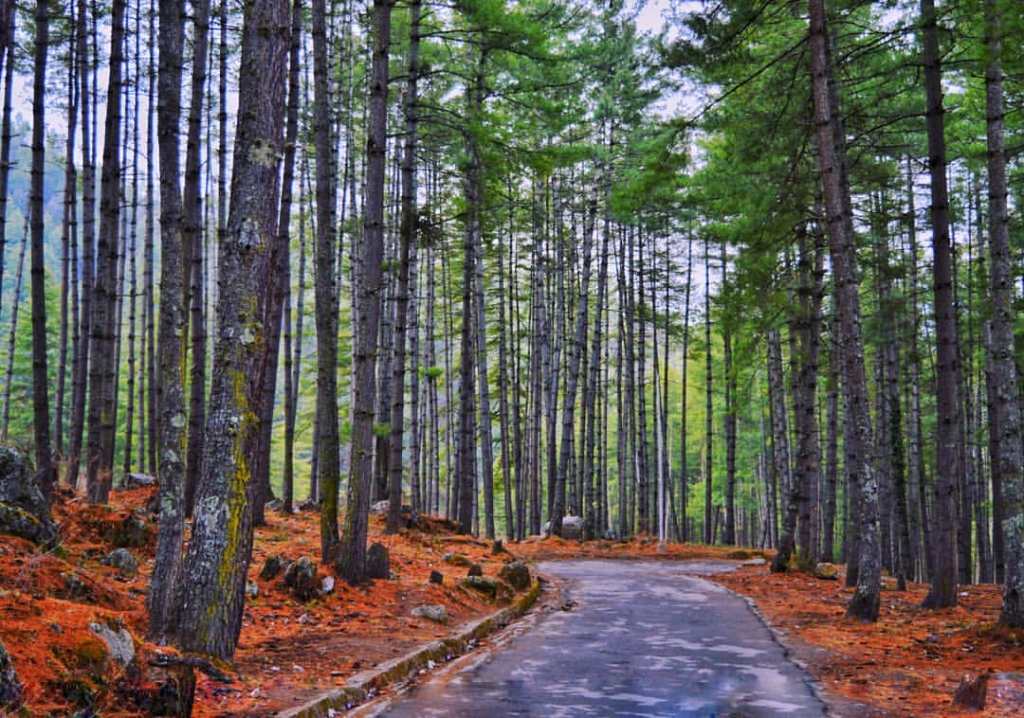
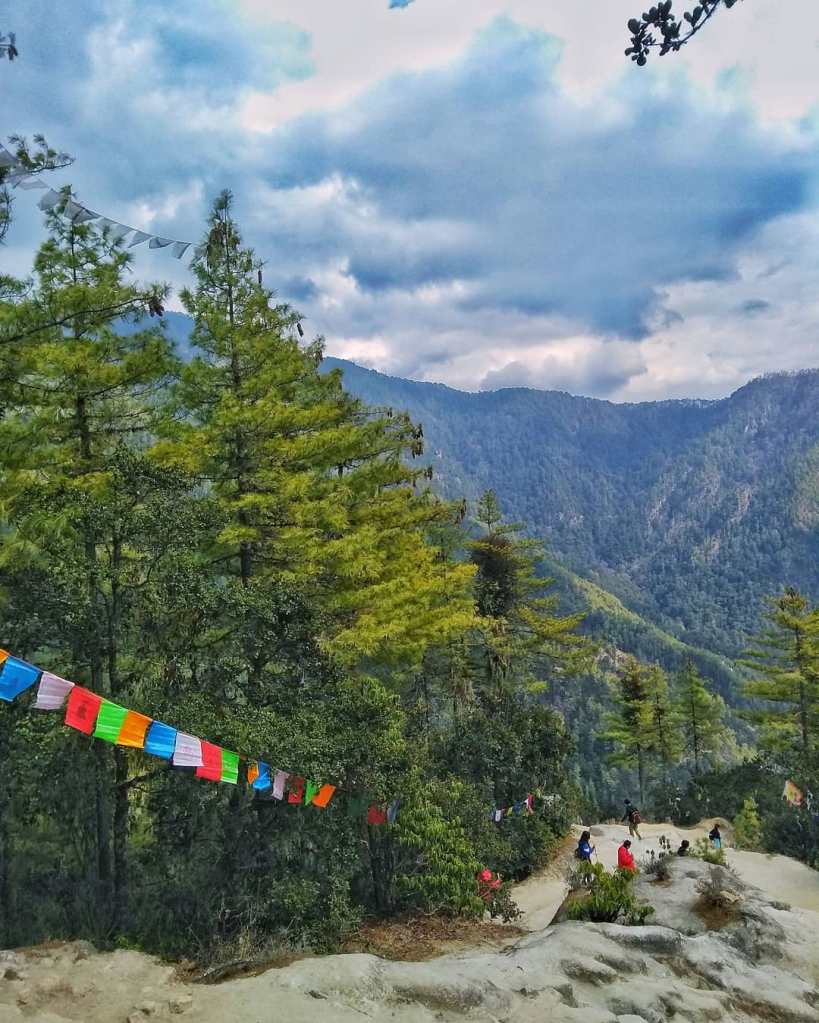
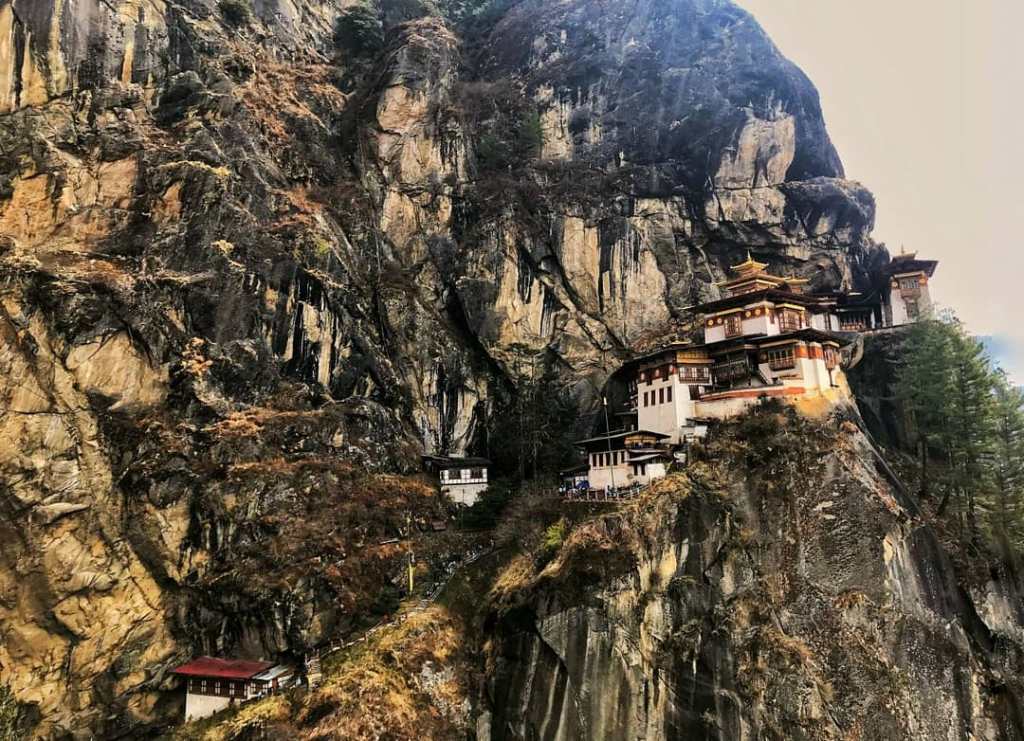
There is a cafe midway through the trek, it is usually full and very overpriced, so take snacks and water for the trail. Be sure not to litter or play music, be mindful of the fact that this is a religious place for many.
When entering the monastery, you are not allowed to carry anything. They do have locker services, however, locks for the same may not be available all the time. So, either leave valuables back in your hotel or carry a lock with you.
The views along the hike and at the top are very rewarding. The sense of accomplishment is unparalleled. Wear good hiking shoes and be prepared.
💡The souvenirs at the bottom of the trail are generally cheaper than the ones you find at Paro city.
Day 5 – Chelela Pass, Haa Valley
On Day 5, we went a bit offbeat. Well, a lot offbeat. Not many people have heard of Haa Valley in Bhutan. It is one of the least developed valleys of Bhutan. Merely 13 miles away from the Indo-China border at Doklam, this valley is thinly populated and super remote. The drive here will feel like you’ve crossed over to another world. It is of strategic importance to both Bhutan and India and hence both armies have bases here.
You can reach this valley by crossing the highest motorable pass of Bhutan, Chelela Pass (3810m above sea level). We got lucky since it had snowed before the day of our travel and we got to experience Chelela at its best, decked in snow, dense forests with pine trees, the leaves having a generous serving of snow dollops on top. Truly a wonderland.
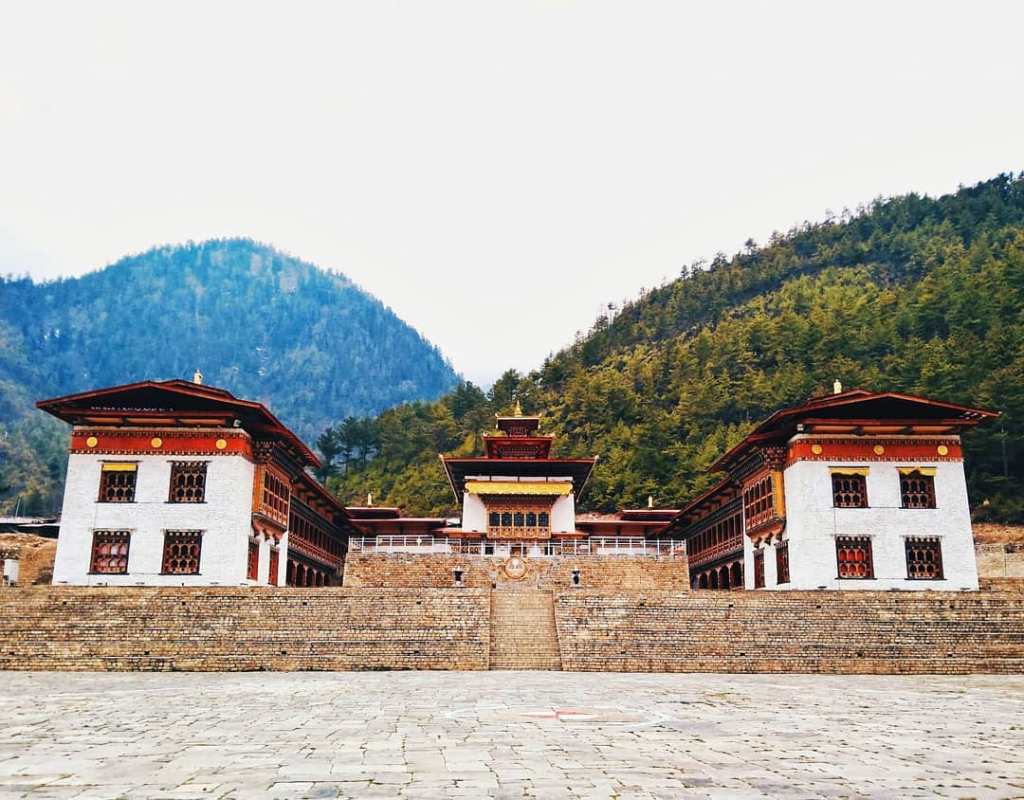
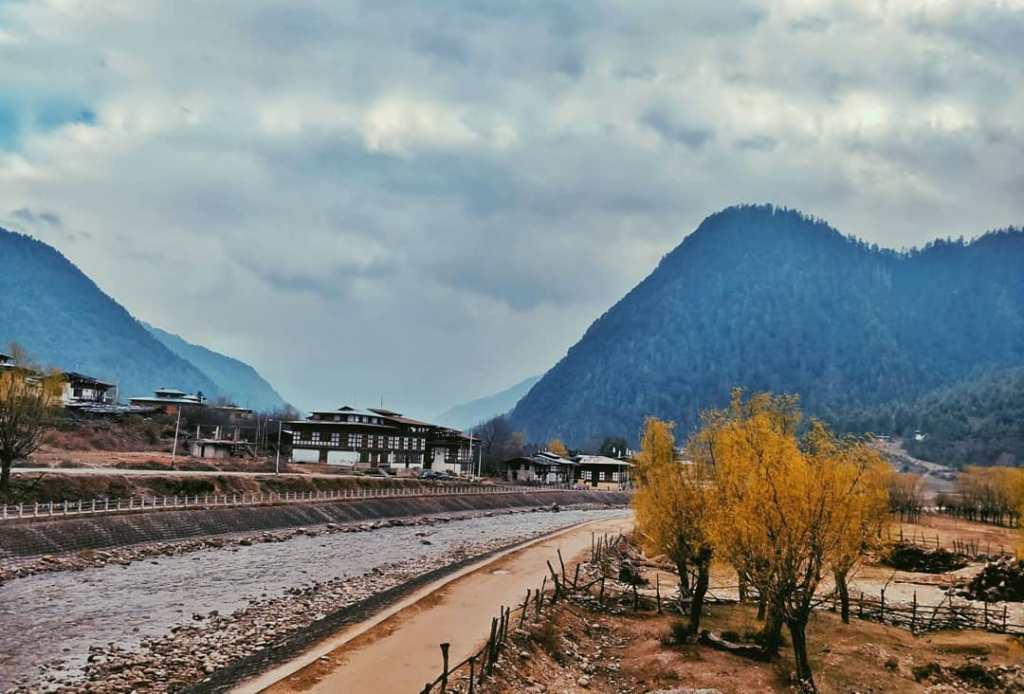
There isn’t much to do in Haa Valley. You can visit the Lhakhang Karpo (White temple) and Lhakhang Nagpo (Black temple) monasteries. There wasn’t another tourist in sight, we had the whole place to ourselves. It was magical. The town itself feels like toy town, like someone stacked houses alongside a gushing river. The locals were friendly and the walks alongside Haa Chhu were serene. Easily my favourite part of the trip.
Day 6 – Dochula Pass, Punakha
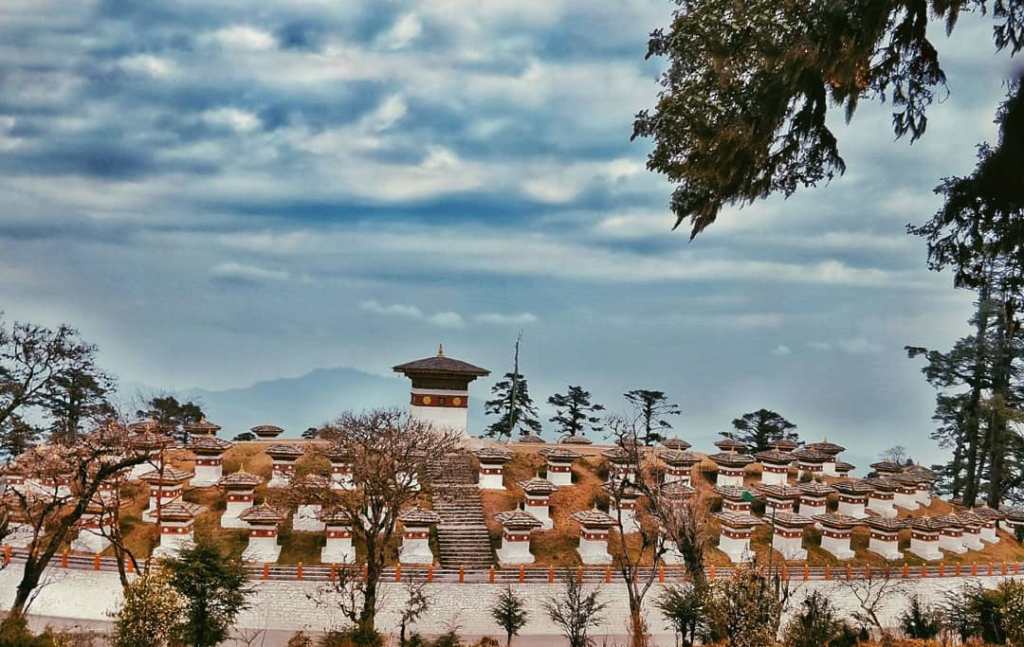
Today, we had to drive past Chelela Pass again to cross over to another stunning side of Bhutan. On the winding roads to Punakha, you will cross Dochula Pass, the gorgeous place where the Queen Mother has built 108 Memorial Chortens. A place where peace comes knocking on your door, and you will welcome it with open arms. The rhododendron forest rises high up all around the chortens, giving it a very gloomy feel, yet you will feel at home.
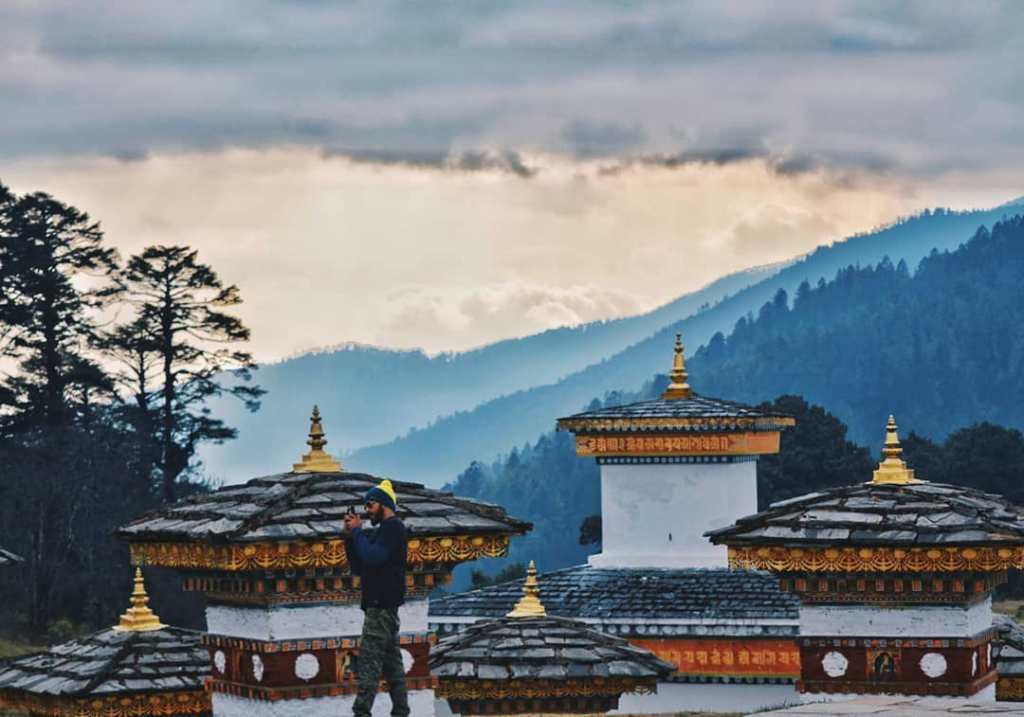
This trip is quite long, almost 6 hours. So, we went to bed early after a delicious meal and some enjoyable time with our host’s family and our friendly driver, around the bonfire.
Day 7 – Phobjikha Valley
We began our journey towards the famous U-Shaped glacial valley of Central Bhutan, Phobjikha Valley. This was our most awaited day of the itinerary. I have no words to explain how wonderful this place was. We just sat there, stunned, admiring, speechless. Our driver was trying to explain how this valley looks during the winters and I couldn’t fathom something more beautiful than what I was already witnessing. Something so untouched, unmended, unbroken. Absolutely surreal.
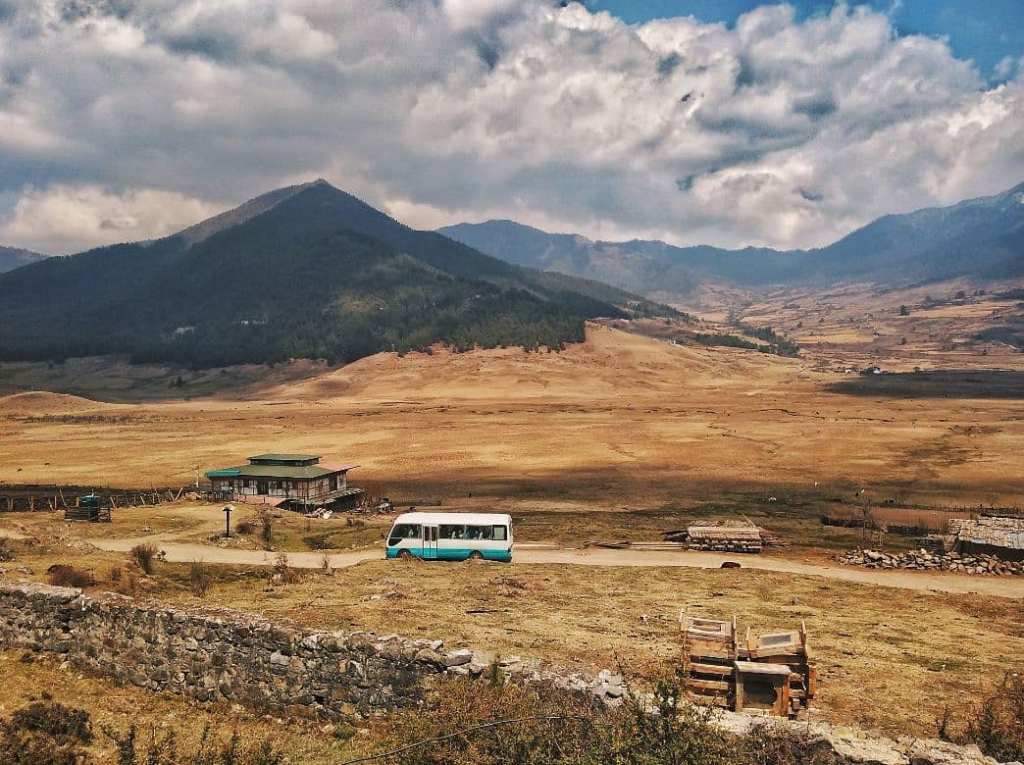
If you have to pick a place to definitely visit in Bhutan, let it be this. We also paid a visit to the Black-necked Crane Visitor Centre, where we learned a lot about this species and how their arrival is the onset of Winter in Bhutan and is celebrated by the entire region as a festival.
We then visited the nearby Gangteng Monastery or Gonpa. It is said that the migrating Black-Neck Cranes circumambulate the monastery before settling down in the valley during each winter. The temple complex is filled with elaborate holy images and frescos, preserved to a great extent to this date.
💡The market outside this monastery is another great place to buy souvenirs.
Day 8 – Punakha Dzong, Chime Lhakhang
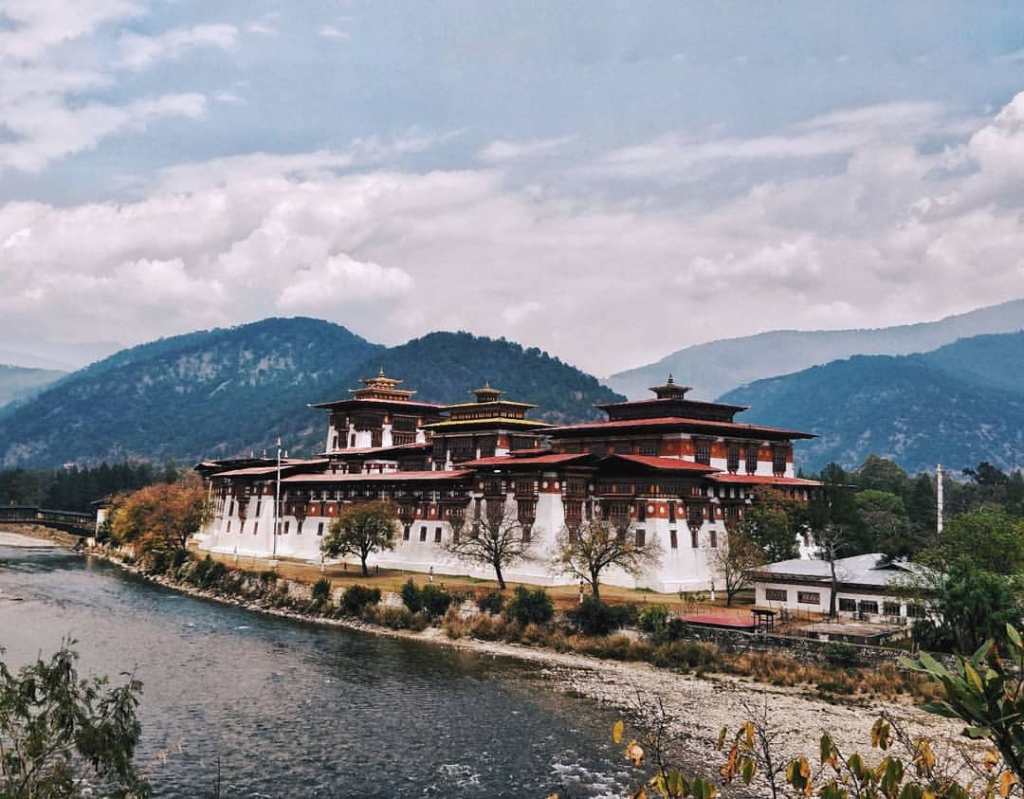
We had saved this day to leisurely explore 2 places. We first went over to Punakha Dzong, one of Bhutan’s oldest, largest and most fortified monasteries. This Dzong has 3 courtyards, built with excellent craftsmanship, with multiple buildings that house stunning frescos. Take your time to explore each and learn about the story that it is portraying. This also a great place to talk to a few monks and understand their way of lives.
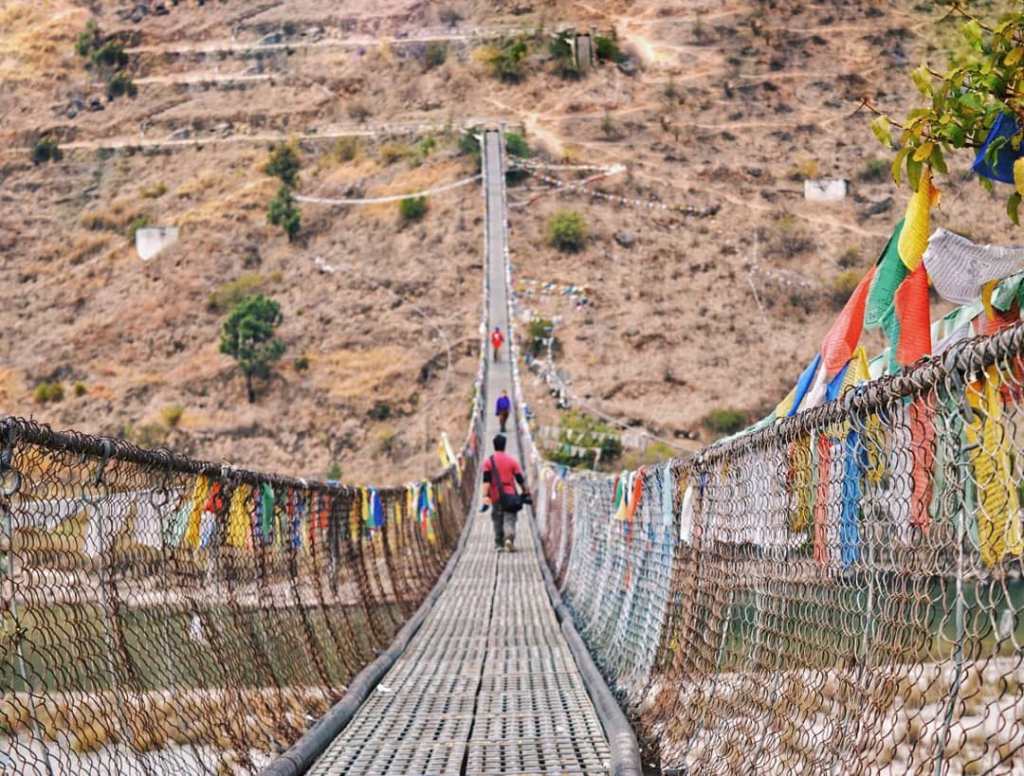
We then went over to the longest Suspension Bridge of Bhutan (180 m in length) and one of the oldest in the World. It crosses over the Po Chhu river, offering spectacular views. During the season, one can also do river rafting in this river. The suspension bridge is the perfect photo-op.
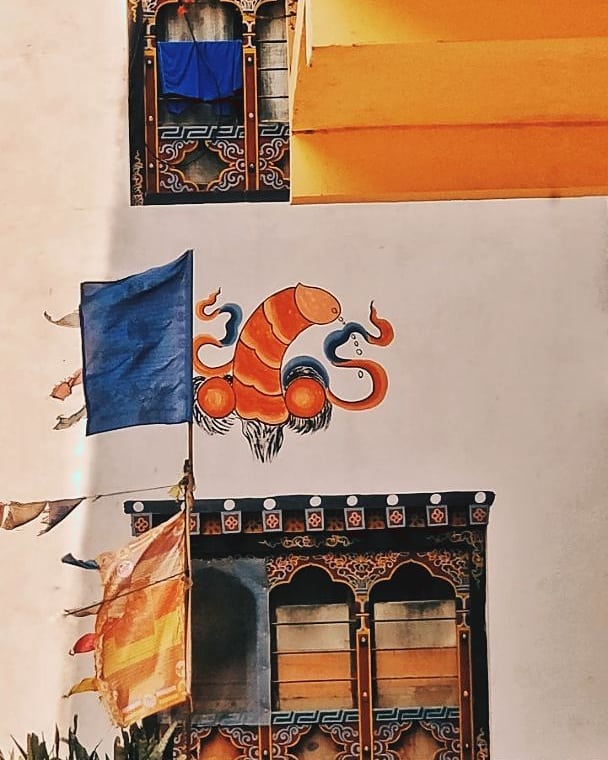
Last stop on this trip, Chime Lhakhang, the fertility temple of Bhutan. Young couples come here to be blessed by the phallic in hopes of having children. This temple is dedicated to the Divine Madman or Drukpa Kunley. He encouraged painting of phallus all over the temple stupa that he built. Even to this day, the region is dominated by paintings of phallus on houses as symbol of good luck. What a unique temple! We were totally fascinated. Don’t forget to shop for little keepsake phalluses.
After lunch, we headed back via Dochula Pass to Thimphu. We spent the last night in Bhutan hanging around the Clock Tower Square, shopping, drinking, eating and just being grateful for such a beautiful trip.
Day 9 – Thimphu to Jaigaon
On the last day, we had a scrumptious Bhutanese breakfast and bid adieu to this breath-taking Country. The drive back to Jaigaon was scary since it was raining heavily throughout. We didn’t stop anywhere since we had a train to catch. But, the entire drive back was filled with our bunch reminiscing about everything that transpired in the last few days and the feeling of melancholy set in.
Bhutan was truly beautiful!
 Winding Roads & Pages
Leave a comment