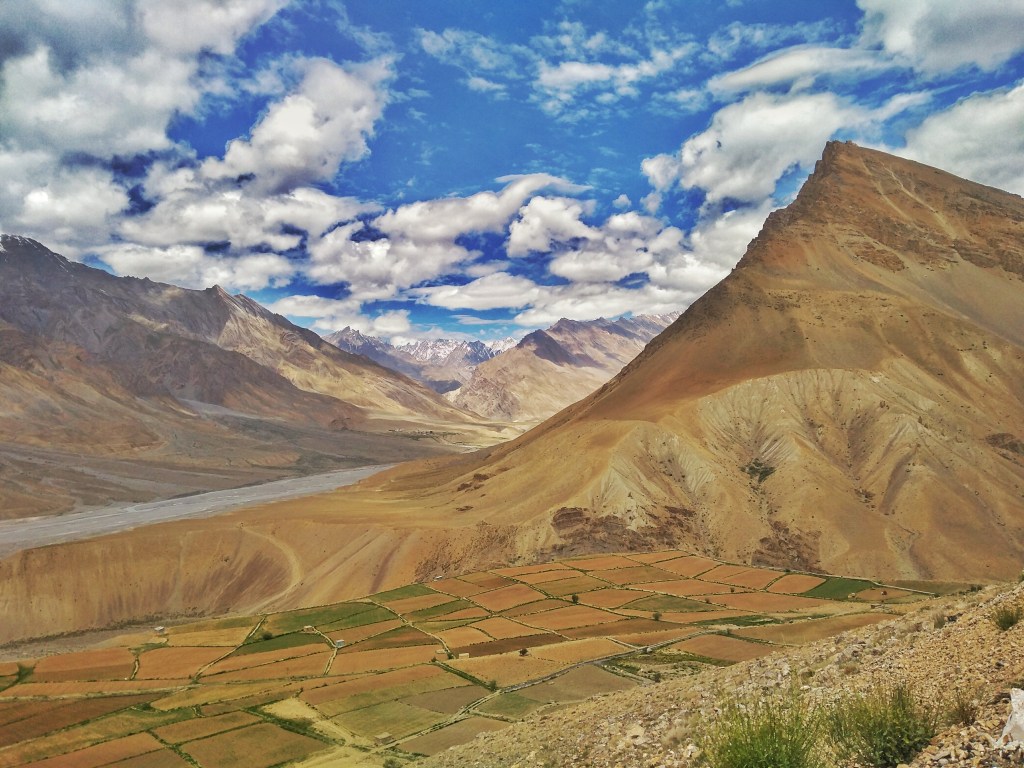
A world within a world. A place where God lives.
Those were the phrases Rudyard Kipling used to describe this daunting beauty called Spiti Valley. While they still hold largely true, if I may add to it, it would be ‘A place where you can find yourself’.
A short personal tidbit before I get into the details of how to plan this trip – I was in the middle of my MBA when I decided to visit Spiti, I was lost on what I wanted to do in life or the general direction of where I was headed with my career. This trip gave me so much clarity, something about the resounding silence of Spiti gives your mind enough space to actually be with your thoughts. Kaza is where I sat one evening and wrote down a plan for the next 5 years of my life. I will forever be grateful to this place for that moment of clarity. In general, Spiti pushes you as a person, as a traveler, and while most people will not enjoy its ruggedness, there is a back to basics sentiment here that gave me utmost joy.
As someone that people often come to for destination advice, I’ve always told them Spiti is one place everyone should visit at least once in their life. It gives you perspective like no other, about the world, its people and most importantly about yourself.
This blog details the must-visit places in Spiti Valley. You can combine this with our Kinnaur Guide for a full circuit trip covering both Kinnaur Valley and Spiti Valley.
How to reach Spiti Valley?
There are two routes to Spiti Valley, one from the Shimla side and the other from the Manali side. While roads on both the routes are splendidly horrid, we would suggest starting the circuit from Shimla and ending it at Manali. Since Spiti Valley is at a considerable altitude of 11000+ feet, it requires a bit of acclimatization. And this route helps you increase your altitude gradually.
There is public transport plying all the way to Kaza from both Manali and Shimla. While the bus from Manali reaches on the same day, the bus from Shimla halts at Reckong Peo and continues its journey the next day. If you’re traveling in a group, hiring a cab is your best bet since this allows you the freedom to stop and explore any place enroute.
When is the best time to visit Spiti Valley?
Spiti is accessible all year round through the Shimla-Kinnaur route. While we’ve been there only during the Summer months, we would love to go back to witness the crazy Winters, for sure. June and July are the perfect months to enjoy the vibrant colors of Spiti, the weather is pleasant, the internal roads have opened, hotels are open and thriving and in general a number of travelers visit during this period. The shoulder months of March-May are when snow from the previous winter starts to melt, most internal roads are closed and most hotels are shut as well. The winter months of December-February is the best time to plan if you want to experience White Spiti. Fair warning, White Spiti is not for everyone, with temperatures hovering around -20°C, most hotels are shut, running water is a distant dream and electricity isn’t available on most days as well.
Will I get network connectivity in Spiti?
Nope. Most parts of Spiti have zero connectivity. The only network that worked decently throughout the trip was BSNL, only for calls, not data. Also, please note that there are extremely few ATMs in Spiti that actually work. Hence, always carry sufficient cash withdrawn from a major city beforehand.
Do I need a permit to enter Spiti Valley?
Indians do not require any permits, just carry a valid photo ID to prove your nationality. Foreign Nationals will require an Inner Line Permit (ILP).
How many days are required to make a Spiti Valley trip?
You can complete the circuit from Shimla to Manali in 8 days. That is the bare minimum you should give to this beautiful slice of paradise. In case you don’t want to explore Kinnaur, you can complete just Spiti in about 5 days.
How much does a Spiti Valley tour cost?
We hired a cab for 5 people and split the cost and hence the trip cost us less than ₹15,000 per person. This includes cab, driver, stay and food for the entirety of the trip. If you’re driving by yourself, which I strongly advise against if you’re heading there for the first time, this cost will considerably come down.
- Gue
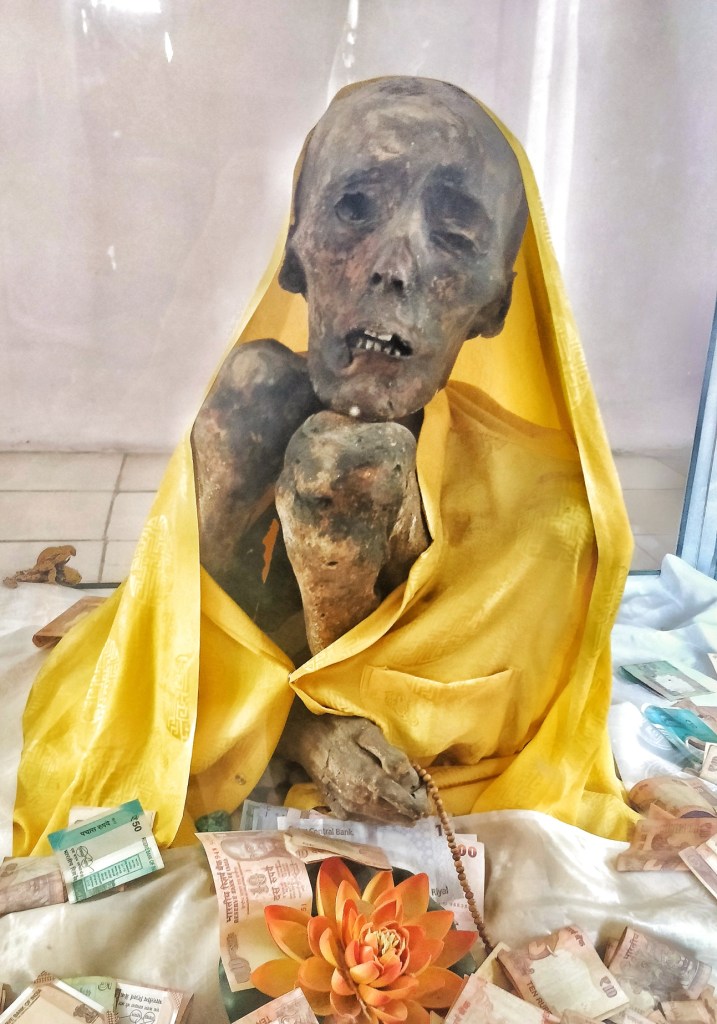
Gue is home to a naturally preserved Mummy, yes the Egyptian kind. One of the few mummies to exist of Tibetan descent. This tiny village perched between Sumdo and Tabo is easily missed by most tourists. But, Mummy Lama, as fondly referred to by the villagers, deserves a visit. Local folklore believes that Mummy Lama sat in meditation in order to bring prosperity to the village. Some say, he is still bringing prosperity to this day by putting Gue on the tourist map.
The road to this monastery remains closed during winters and hence plan your visit accordingly. A short uphill detour from the Sumdo Tabo highway will get you to this tiny village with doting villagers.
- Tabo
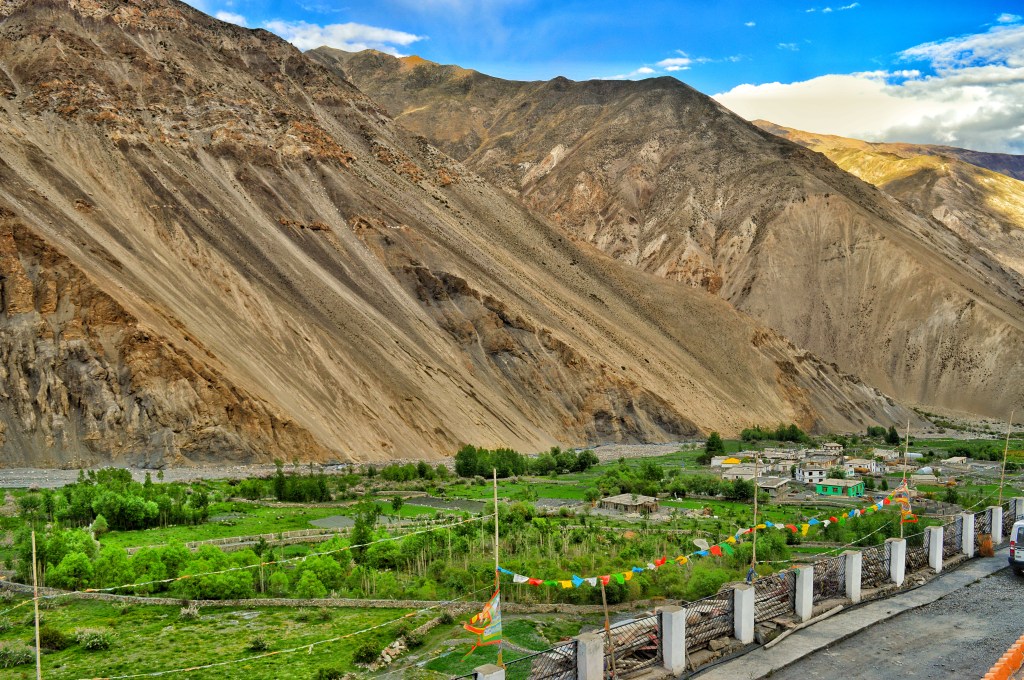
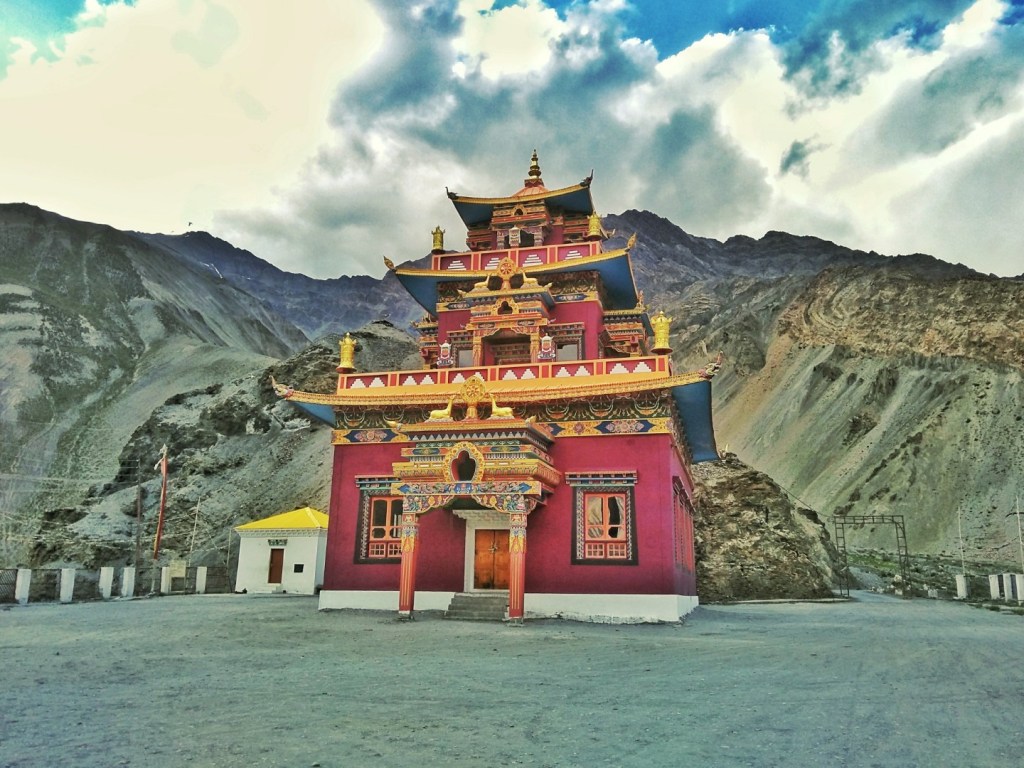
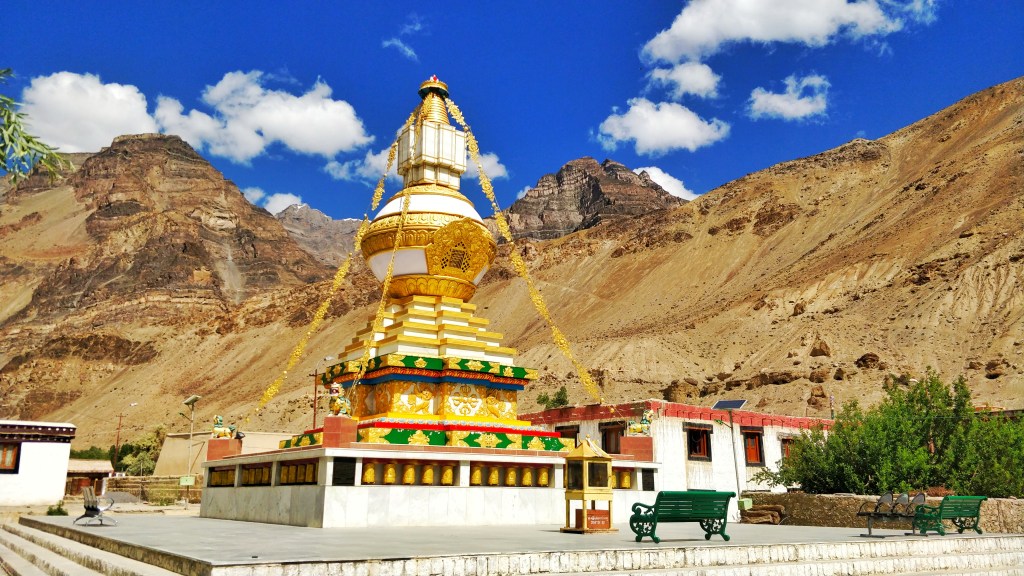
Tabo is situated in the center of a valley on the banks of Spiti River. A quaint little unassuming village with a bunch of homestays lining the highway. Tabo Monastery is the oldest continuously operating monastery in India, believed to be more than 1000 years old. It is home to a priceless collection of murals, frescos, statues and much more, because of which, Tabo is known as the Ajanta of the Himalayas. It feels like you’ve stepped back in time while exploring this Monastery since some of the paintings date back to the 5th Century. The serenity of this place is almost palpable, we immediately felt a positive rush of feelings, forgetting the hectic journey that led us there.
- Dhankar
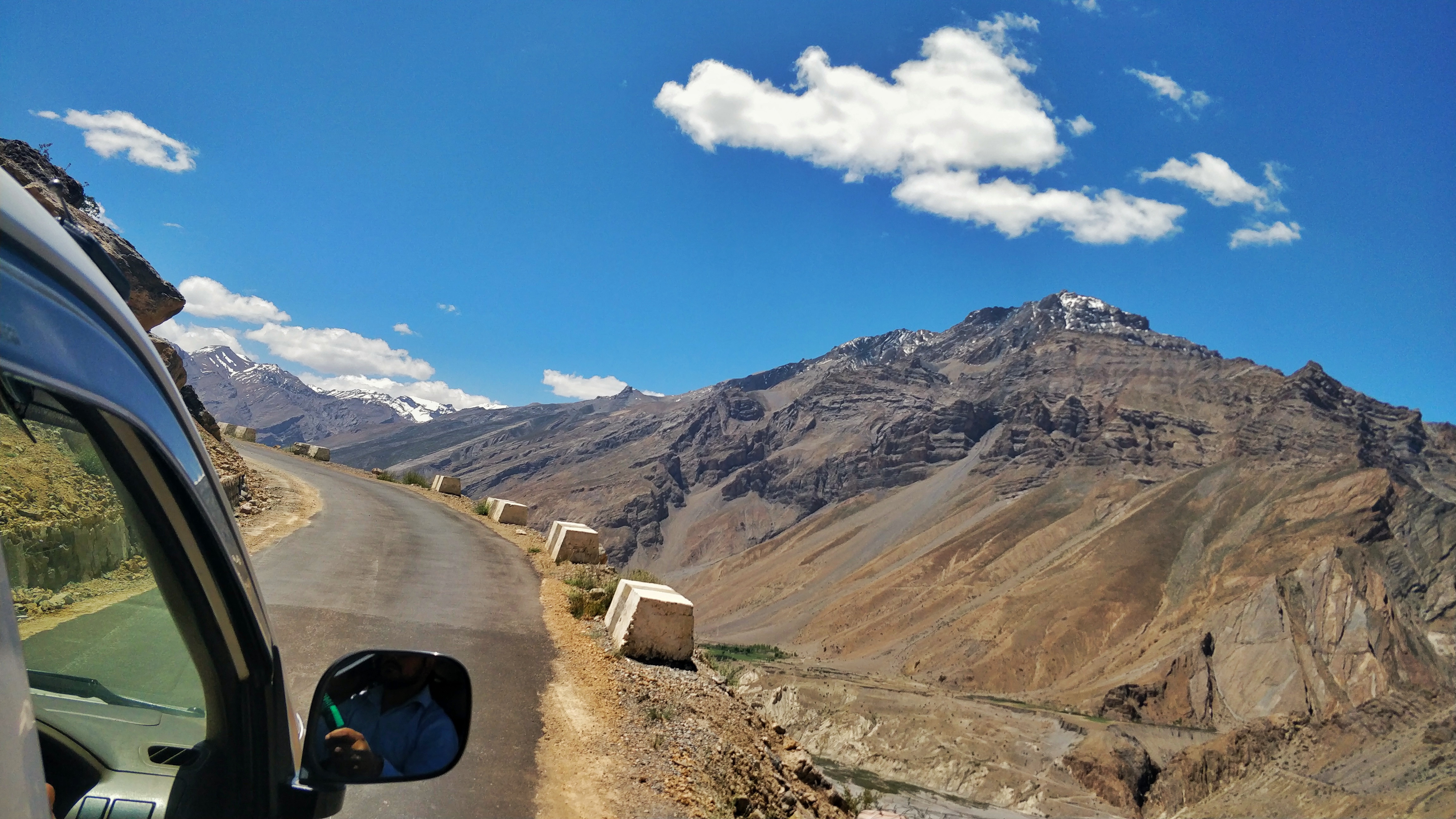
Dhankar houses Dhankar Monastery and Dhankar Lake. The monastery is 1000 years old, built as a fort monastery. The view of the village from the monastery makes it look like the village is emerging out of the mountains; it almost appears one with the mountains. The arid landscape makes you question everything you believed in. The monastery itself is perched on the edge of a mountain with multiple storeys built at different heights of the mountain. This ensures uninterrupted views of the entire valley below.
About 2.5 kilometers from the main village lies the Dhankar Lake. A short 1 hour trek should get you to this pristine alpine lake. We, however, were short of time and couldn’t visit the lake, but we’ve heard it’s immensely beautiful. Do keep in mind that this 2.5 kilometers is going to feel like a 100 kilometers due to the altitude before you decide to do the trek.

- Pin Valley
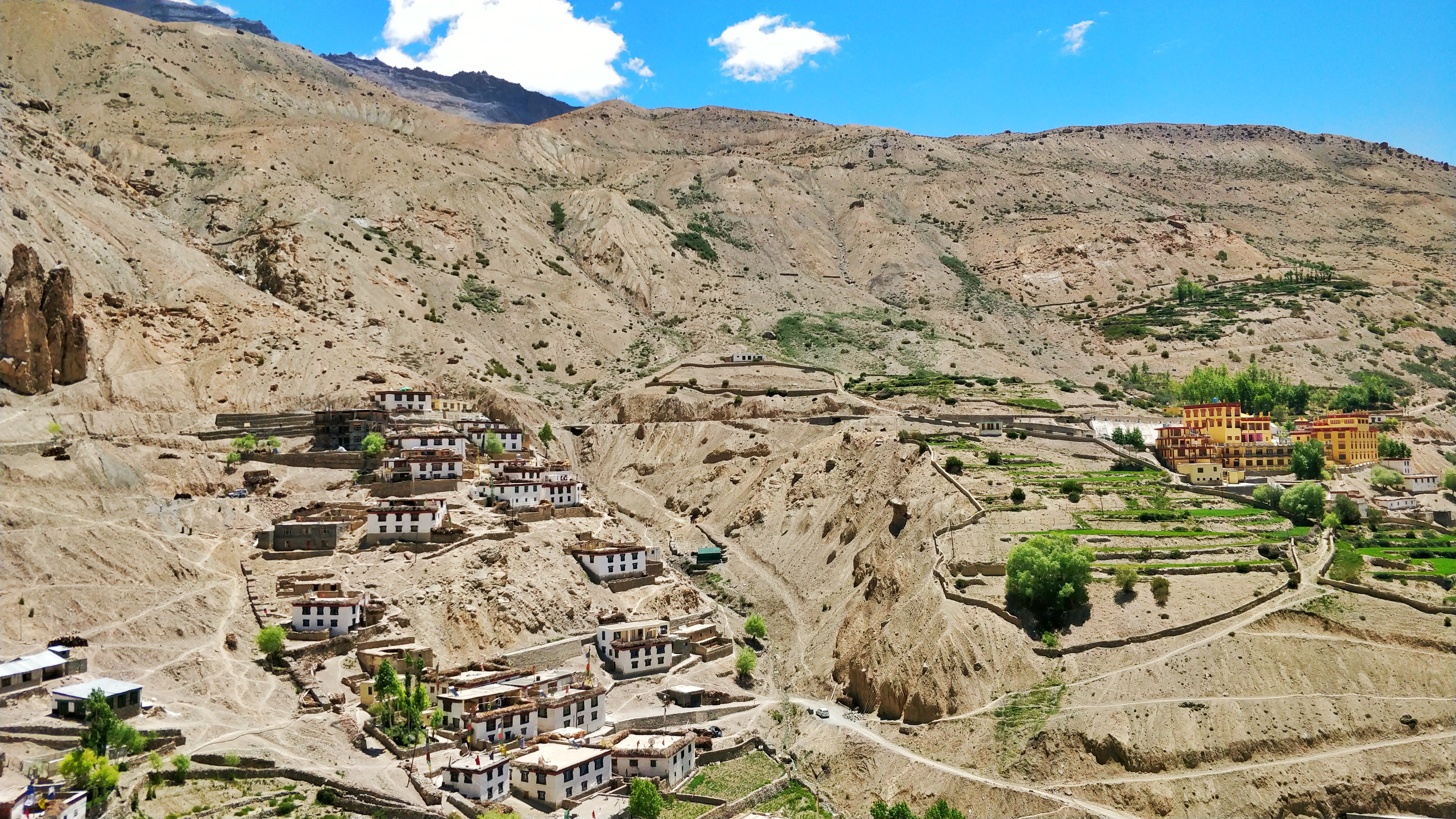
Home to the alluring Snow Leopard, this National Park is a one of a kind, situated amidst a cold desert by the banks of Pin River. There are 17 villages that comprise this Valley with a measly population of 1600. There are 2 major villages where you can get a few basic options to stay, Gulling and Mud. This stunning place is so remote that people here have to travel 100s of kilometers everyday to get basic medical care and education. But the smiles of these people and the warm welcomes will surely make you want to stay longer. Kungri Monastery is a brilliant one, second oldest in the region, home to the sweetest Monks. There are regular buses that ply between Kaza and Pin Valley.
PS: While you’re here, do visit the local school to check how you can help. We carried a bunch of books and stationery and had a great time interacting with the students.

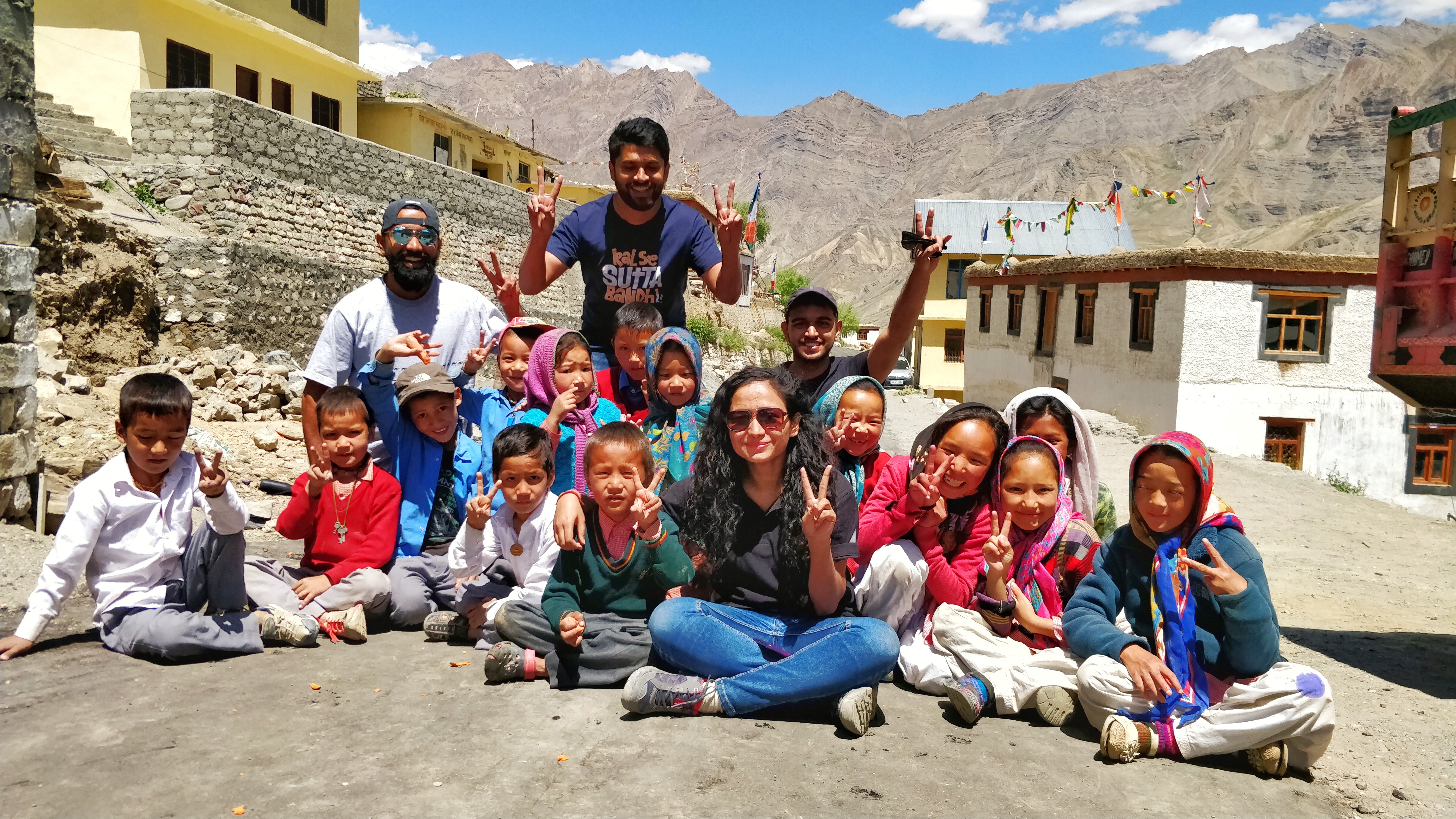
- Kaza
The largest town in Spiti Valley, Kaza has a number of cool cafes, great stays and patchy wifi. Barren landscapes and ancient monasteries dot the town and become the highlight of your stay. While there isn’t much to do in Kaza itself, it serves a great base to visit nearby places and explore the smaller villages of Spiti Valley.
Kaza is a great place to shop for your souvenirs, from woolen sock to dry cheese to sea buckthorn items such as tea. Kaza is also a great place to try out the local cuisine. While your homestay/hostel would be the best place to sample cuisine, some of the cafes we loved are Sol cafe, The Himalayan Cafe and Taste of Spiti.
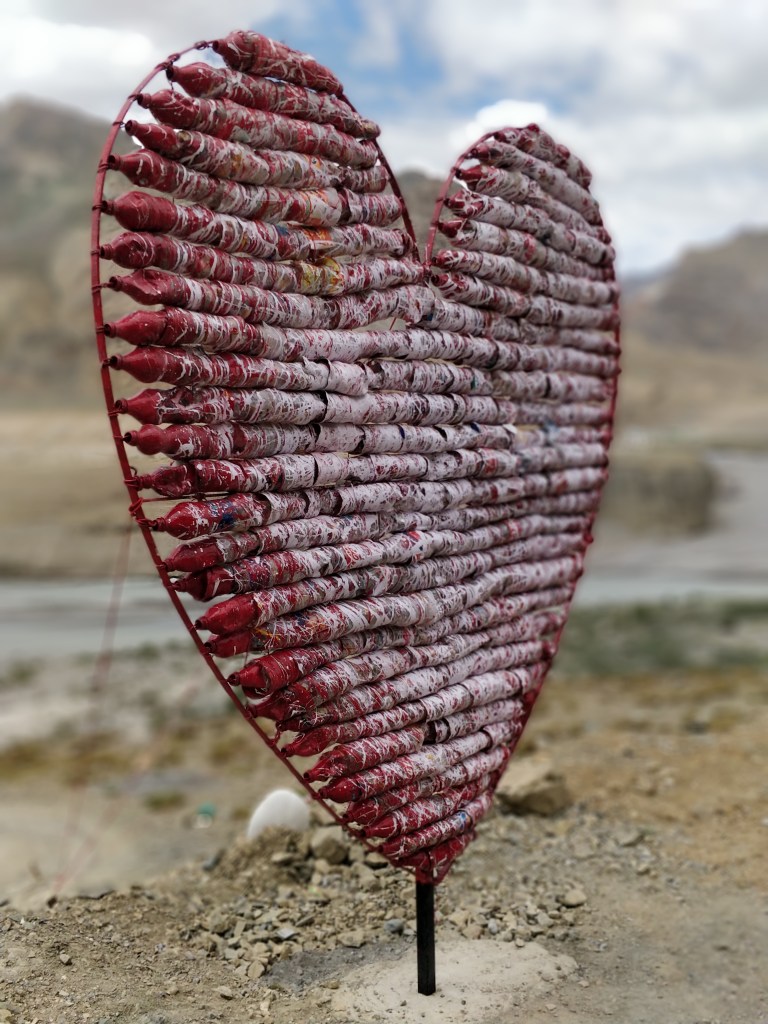
- Key Kibber
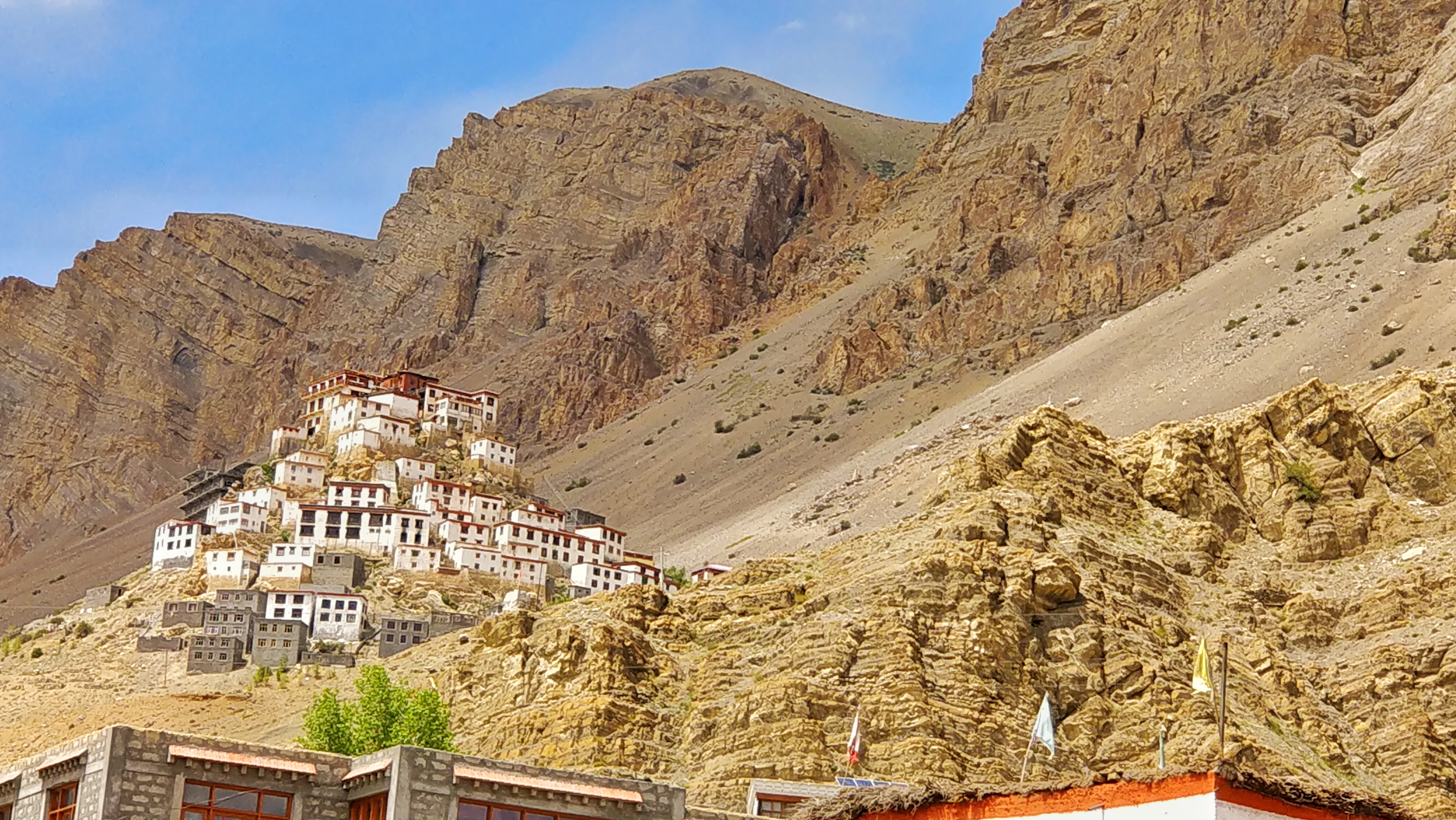
Key Monastery, perched on top of a hill at an altitude of 13500 feet, overlooks the entire Valley. The monastery is the largest in the region and serves as a training center for the Lamas. You can even book a stay here to experience how the monks live for a price of ₹200 only. The meals are free, but the Lamas would really appreciate it if you help out in their chores. While we couldn’t do this, we spent a good amount of time just getting to understand their way of life and the simple ways of surviving this harsh landscape over a cup of butter tea. There is just so much to learn from their wisdom. The sunset view from the monastery is splendid, don’t miss out.
Kibber is a tiny village up the road from Kaza, with less than 100 houses to call home. The landscape is so exquisite that reminiscing while writing this makes me want to book a ticket right away to go back to paradise. A little ahead lies the famous Chicham Bridge, Highest Bridge in Asia at a staggering height of 13500 feet. Surrounded by towering mountains and built over a 1000 feet deep gorge, this bridge is a true spectacle.

- Hikkim
The village with the ‘World’s Highest Post Office’ at an altitude of 14500 feet. This tiny little post office is operational to this day. Walking the tiny pathways through the very few houses in this remote village gives you a sense of self like no other. There aren’t many locals that you’ll bump into, it’ll just be you, the barren mountains, and the green agricultural fields that form a stark contrast with the background. The fuss isn’t about the Post Office, it is about the sheer joy of sending a postcard from such a remote area. Plus, this helps the local livelihood. The postmaster here told us that he loves stamping the postcards, even though he sometimes has to stamp 4000 odd postcards during peak tourist season. But, trust me, the joy of frantically scribbling a note to yourself and posting it from a remote place and receiving it many days after you’ve returned from the trip is like a tiny time travel capsule in itself.

- Komic
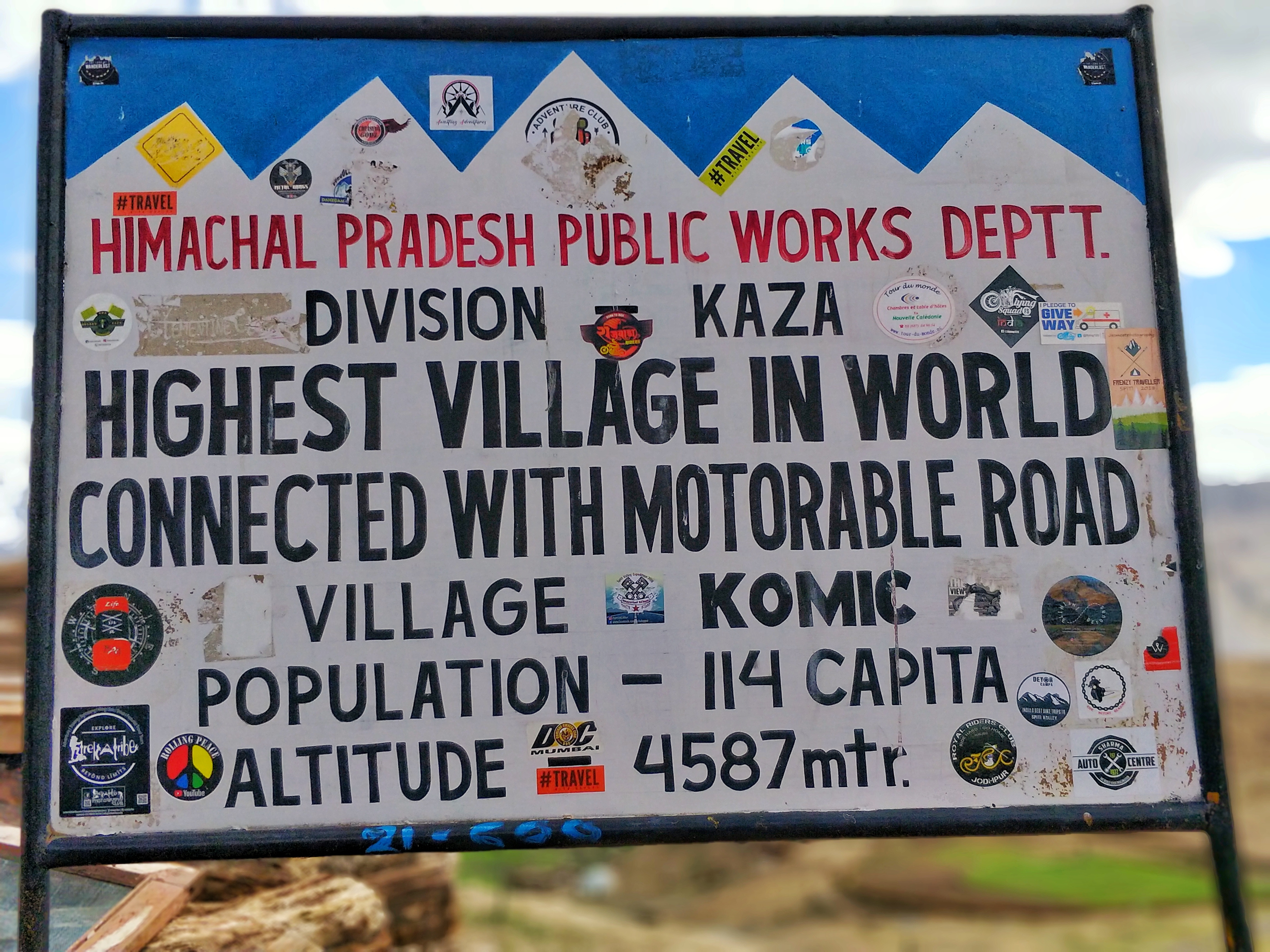
Another of the quaint, unassuming villages of Spiti Valley. The only way to actually understand the Spitian way of life is to spend some quality time in these villages. The people here have small incomes and content lives, something you and I can probably learn a thing or two about. Komic used to hold the record of the ‘World’s Highest Road connected by a Motorable Road’.
Something about this village makes you want to stay and take in as much as you can and make a mental painting of it, so that you can summon the rolling hills and the houses that looked like tiny specs whenever you wanted a moment of peace. Don’t forget to have momos and maggi at Spiti Organic Kitchen, something about maggi in the mountains that steals our hearts.

- Langza
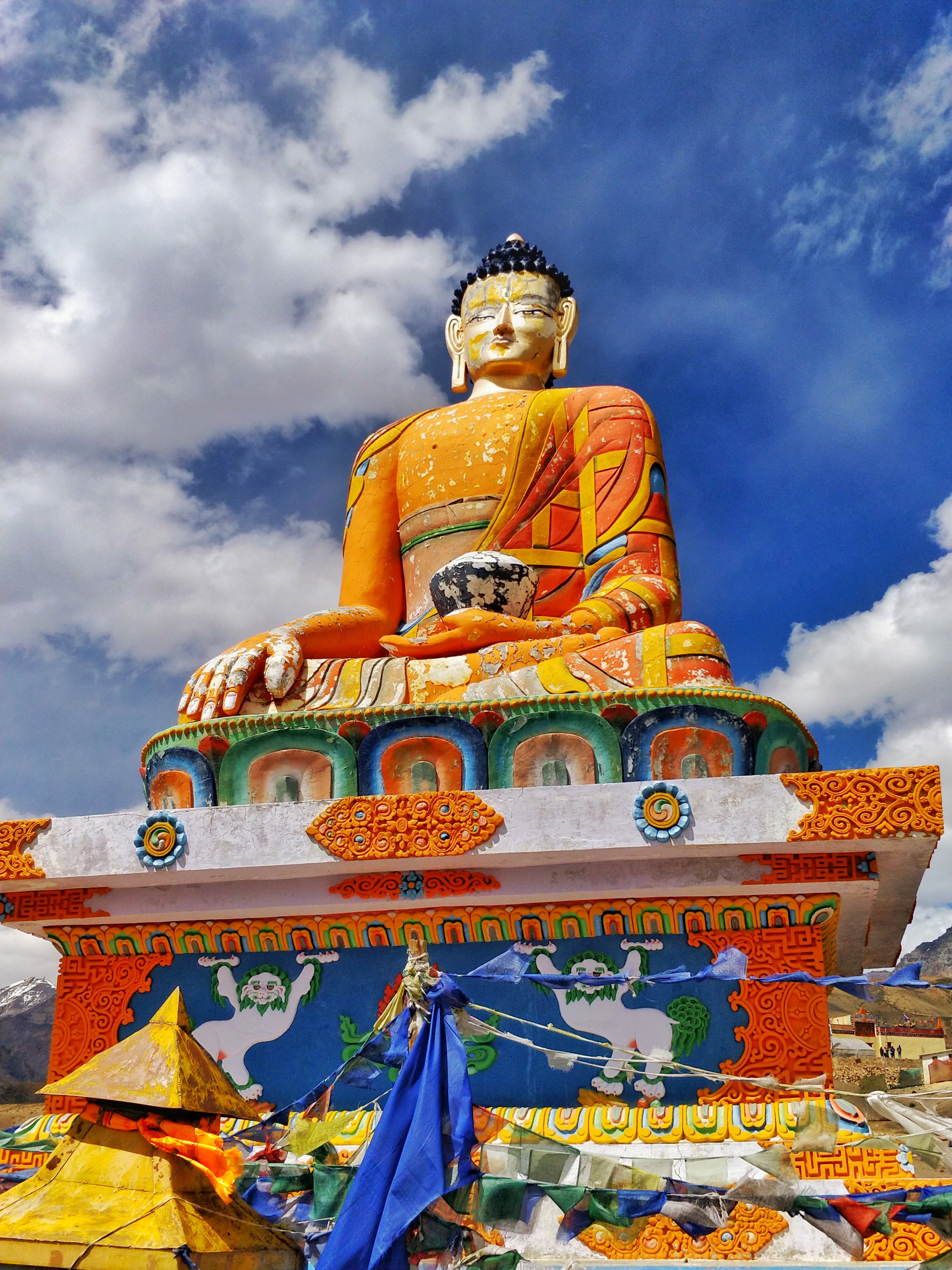
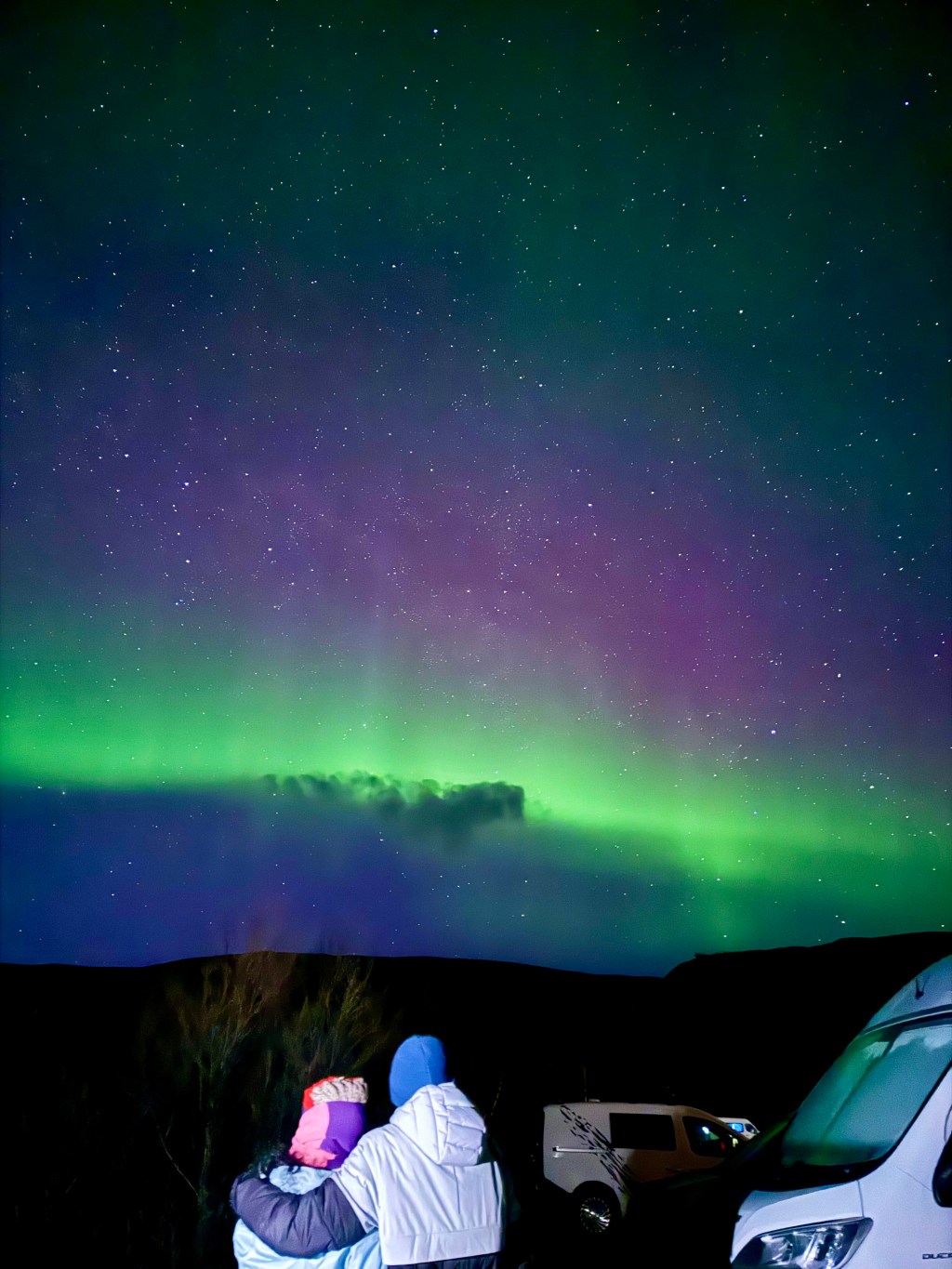
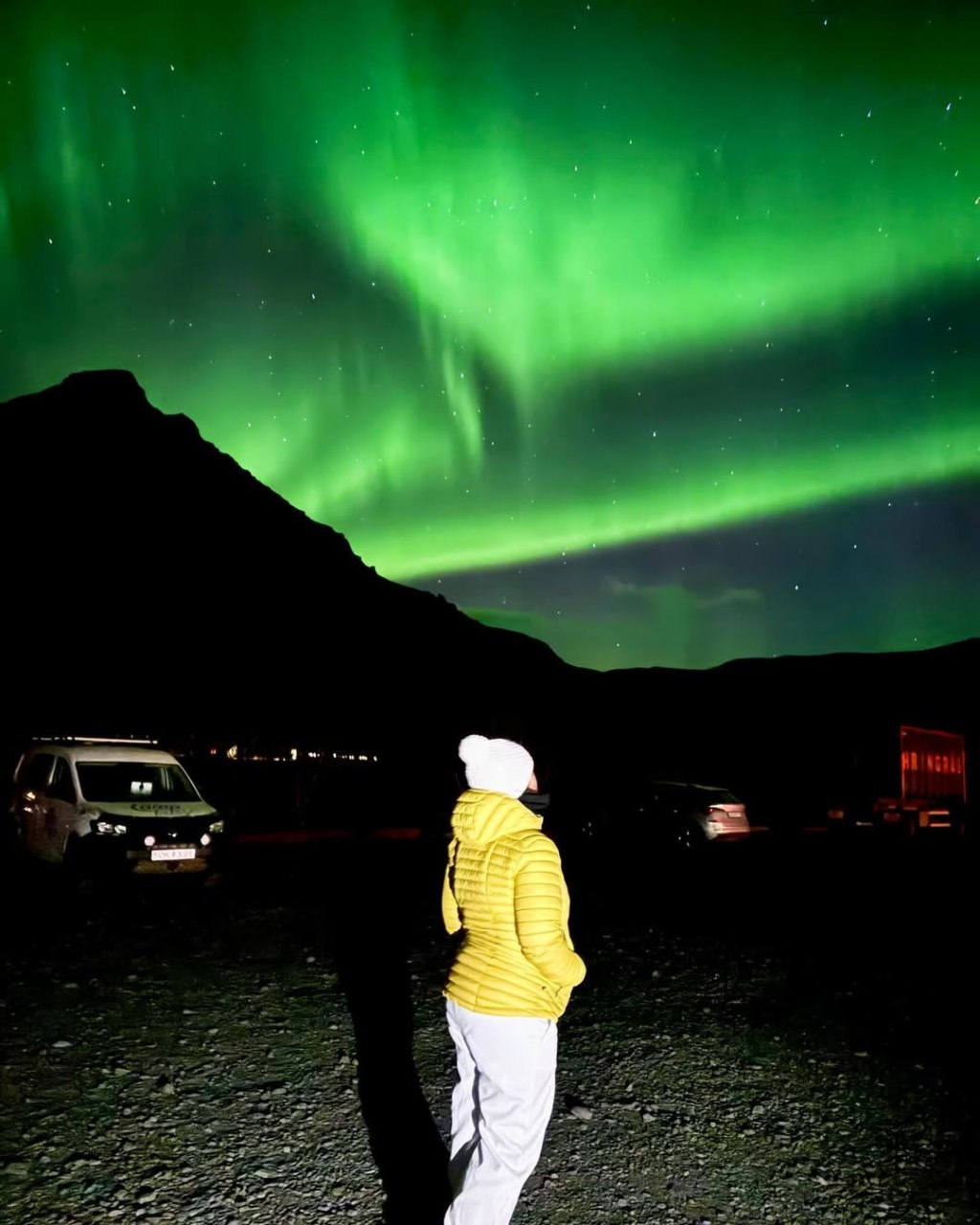
Commonly referred to as the ‘Fossil Village’. Few of you will remember the geographic lesson of the giant sea that once existed where the Himalayas now stand. This Sea no longer exists, but the fossilized marine life sure does. A walk along the village and you’ll find plenty of them on the sides of the mountains. You’ll even find a bunch of enterprising kids selling them for a couple of bucks. The main tourist attraction of Langza is the Golden colored Buddha statue that sits atop a hill overlooking the entire village and the surrounding valley. Langza is also the best place for stargazing in the entire Valley and hence there are a bunch of comfortable homestays in Langza.

- Kunzum La
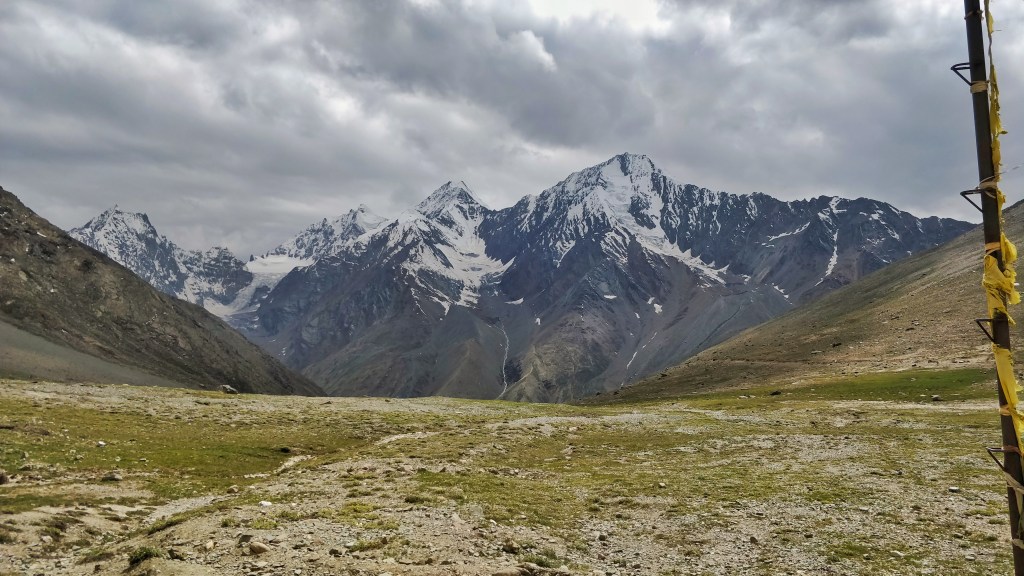
Kunzum Pass or Kumzum La is a high mountain pass that connects the Spiti and Lahaul Valley of Himachal Pradesh. At an altitude of 15000+ feet, this high pass is a sight for sore eyes. There is a temple at the top dedicated to Goddess Durga and it is considered good luck for the onward journey. The views from the top are unparalleled, with Buddhist prayer flags fluttering and snow peaked mountains far off on the horizon. Beware of signs of AMS here since this pass is at a considerable altitude.
- Chandratal
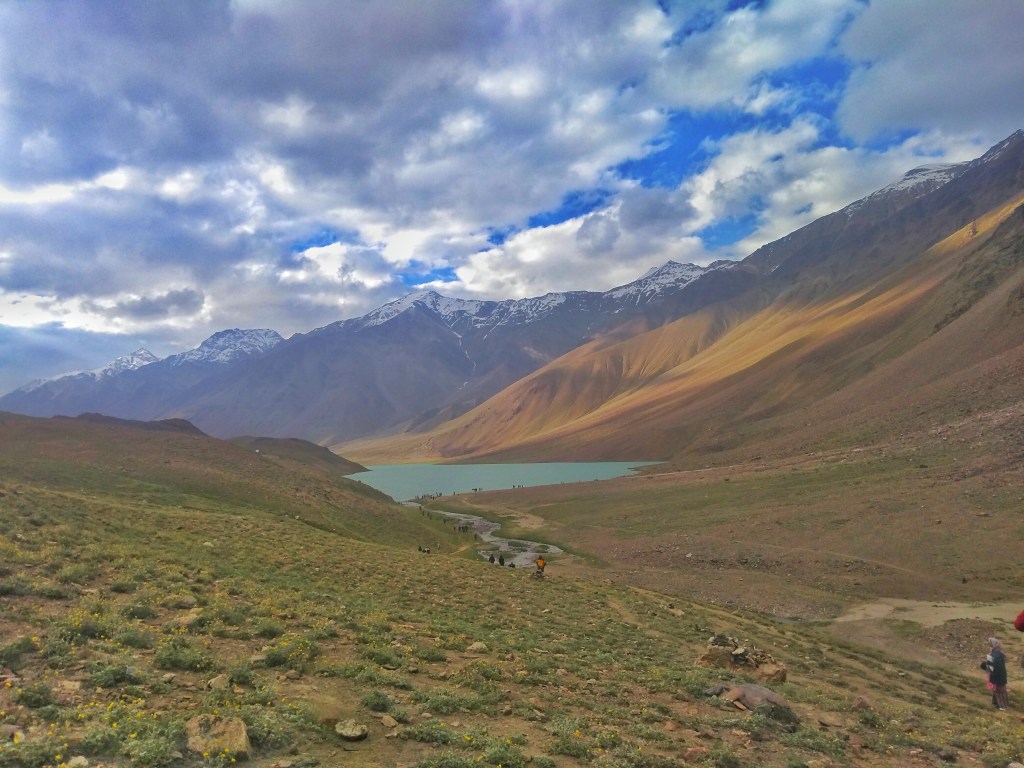
A few kilometers ahead of Kunzum La is the deviation towards Chandratal. Any Spiti trip will be incomplete without a visit to this beauty. While this lake may be small in comparison to many other alpine lakes, it definitely isn’t lagging in terms of beauty. The short hike from the parking lot to the lake feels like the toughest climb due to the altitude. But power through, because heaven awaits at the end of it all. The pristine blue waters against the barren mountains is such a stunningly great composition to capture. You will struggle to find motivation to do much else except sit and admire the beauty of this place.
Ensure that you have a booking in one the tented cottages at Chandratal. During peak season, everything gets sold out and there won’t be any place for you to stay since there is no village or town nearby. This happened with us. Thankfully, our driver took us to Chacha Chachi Da Dhaba and they found us a storage room to stay in. This adorable couple runs a small kitchen near Battal and ensure that stupid travelers like us find a warm place to spend the night.
Spiti Valley Itinerary
Day 1: Shimla to Reckong Peo along the beautiful cliff hanging roads of Kinnaur
Day 2: Reckong Peo to Tabo; enroute pay a visit Nako Monastery and Lake. You can also visit the Mummy Lama at Gue Monastery
Day 3: Tabo to Pin Valley; enroute visit Dhankar Monastery and Lake, confluence of Pin and Spiti River, Kungri Monastery
Day 4: Pin Valley to Kaza; spend the night exploring the markets of Kaza and sampling local cuisine
Day 5: Kaza to Key Kibber and Chicham; a day trip to visit Key Monastery and Chicham Bridge
Day 6: Kaza to Hikkim, Komic and Langza; a day trip to cover the remote villages of Spiti. You can also choose to stay at Langza to enjoy the perfect night sky
Day 7: Kaza to Chandratal/Battal; a long day with a visit to Kunzum La and Chandratal Lake
Day 8: Chandratal/Battal to Manali; a longer day with horrid roads and an amazing end to your trip
 Winding Roads & Pages
Leave a comment