If you’ve decided on traveling to Kinnaur and Spiti Valley, you’re in for a treat. For most people, Himachal is usually Shimla and Manali, for a few others it might also include Mcleodganj, Dalhousie and Bir, almost no one actually looks beyond. So glad you’re one of those few.
Kinnaur is stunning with some hidden gems. There are a handful of places in India that we would call more mesmerizing than Kinnaur. We went in not expecting much, ready to be blown away, and gosh, how we are!
This blog details out a short trip to Kinnaur Valley. You can either use this as is for a long weekend or you can combine this with Spiti Valley, like we did.
How to reach Kinnaur Valley?
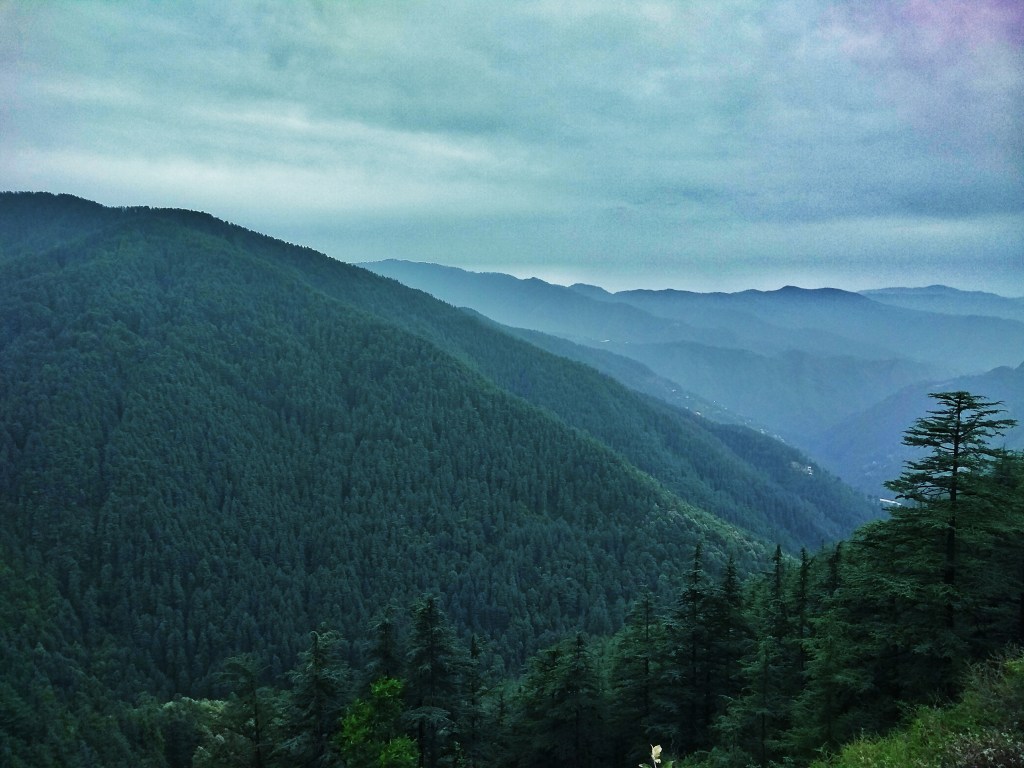
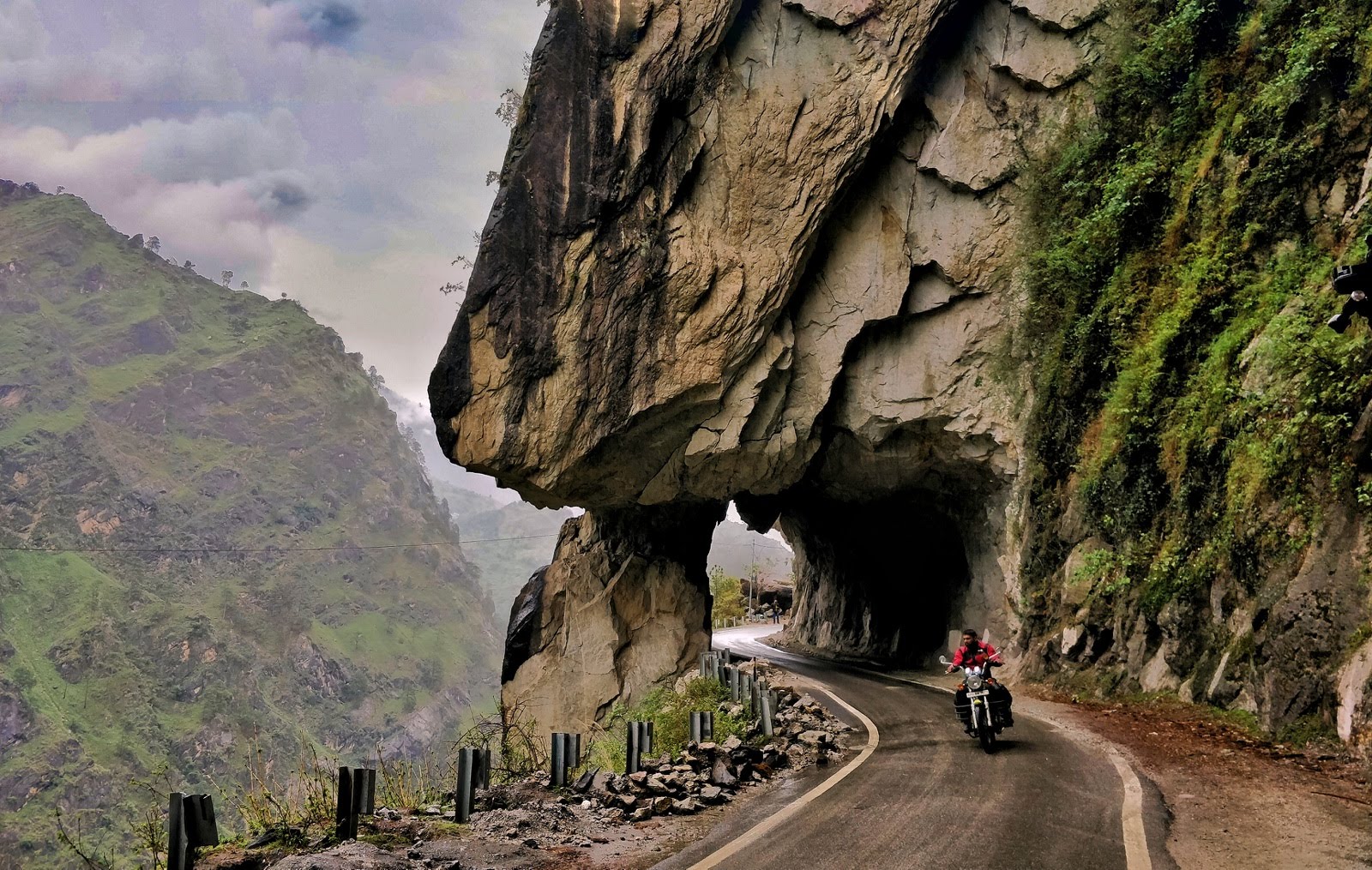
The only way to reach Kinnaur is by road. Also known to be one of the most treacherous/deadliest roads in the World. It is a scenic cliff-hanging route with the Baspa river to give you company throughout. The road winds itself through these gorgeous mountains to ensure that this last valley before Tibet is connected to the rest of the Country.
You can either take an early morning bus from Shimla (Regular buses ply from Shimla and Narkanda) or you can take a cab or you can self drive if you’re confident enough.
When is the best time to visit Kinnaur Valley?
April to June is the best period to visit Kinnaur. Spring-summer time with pleasant weather, blooming flowers and lush greenery will dominate the landscape. There is very little chance of rain and hence little chance of landslides, although this can always be a possibility.
October & November are also great months. The weather is not too cold but cold enough. Plus, very few tourists visit during this season.
Will I get network connectivity in Kinnaur?
We wouldn’t count on it. Some parts of Kinnaur have zero connectivity. The only network that worked decently throughout the trip was BSNL, only for calls, not data. Also, please note that there are few ATMs in Kinnaur that actually work. Hence, always carry sufficient cash withdrawn from a major city beforehand.
Places to visit in Kinnaur Valley
- Sangla Valley
Stunning landscapes, gushing Baspa river, deep gorges and steep cliffs. One of the few places where Hinduism and Buddhism not only coexist, but coexist with harmony. You can see this beautifully in the famous Bering Nag temple which also houses the Sangla Buddhist monastery. Arguably the most visited places in the lower Kinnaur valley. Holi celebrations as part of the 4 day Faguli festival is not to be missed here. Celebrated with loud music and dancing and unlimited Phasur (Local Wine) distributed freely, this festival is a sight to behold. Specially interesting is the last day of the festival, when the three local deities come out to dance (as believed by the locals).
You can also visit the nearby Kamru Fort. This fort is more than 1500 years old and is entirely made of wood. However, this fort still stands strong and is shining in its intricate glory. Enjoy the walk up here through apple and apricot orchards.
- Chitkul
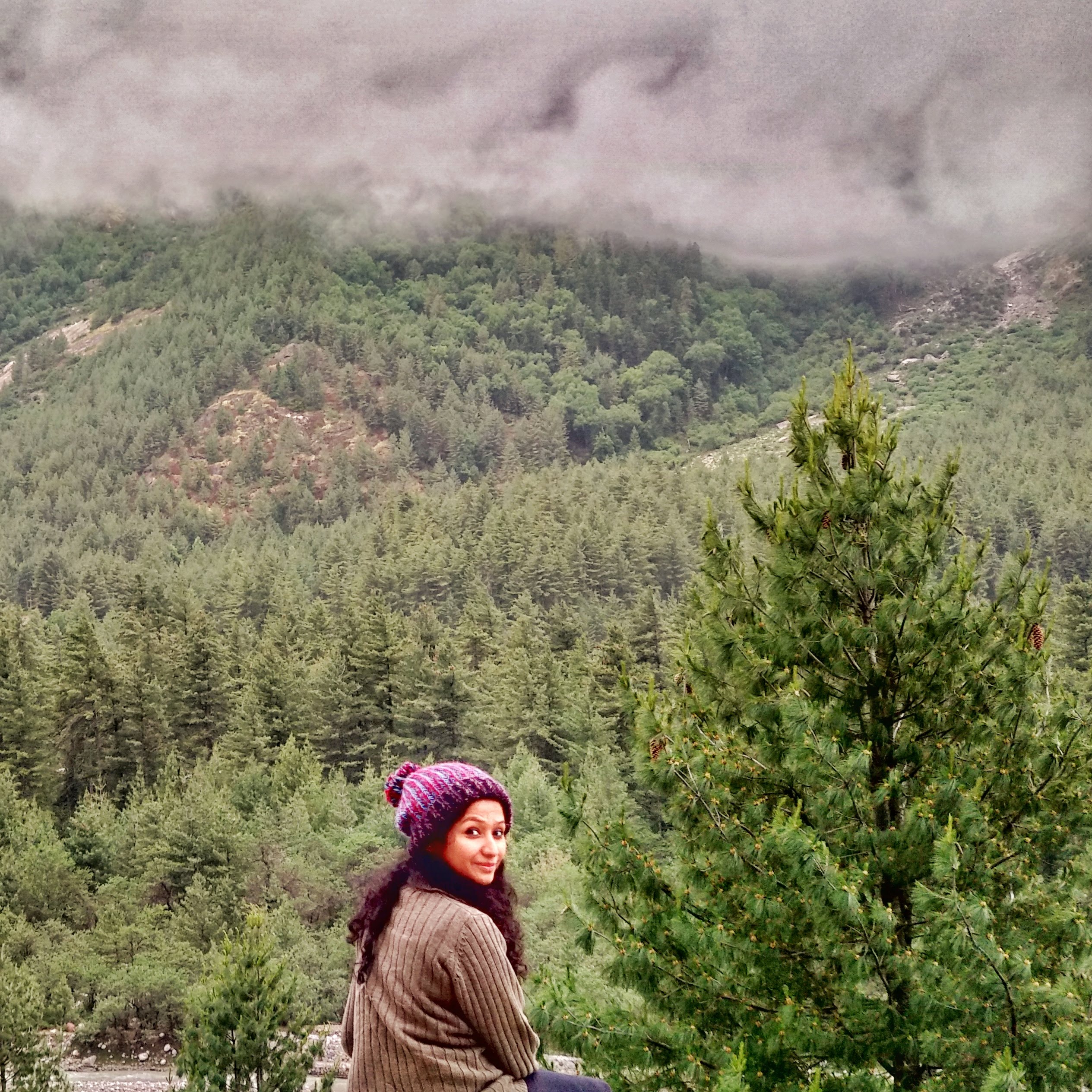
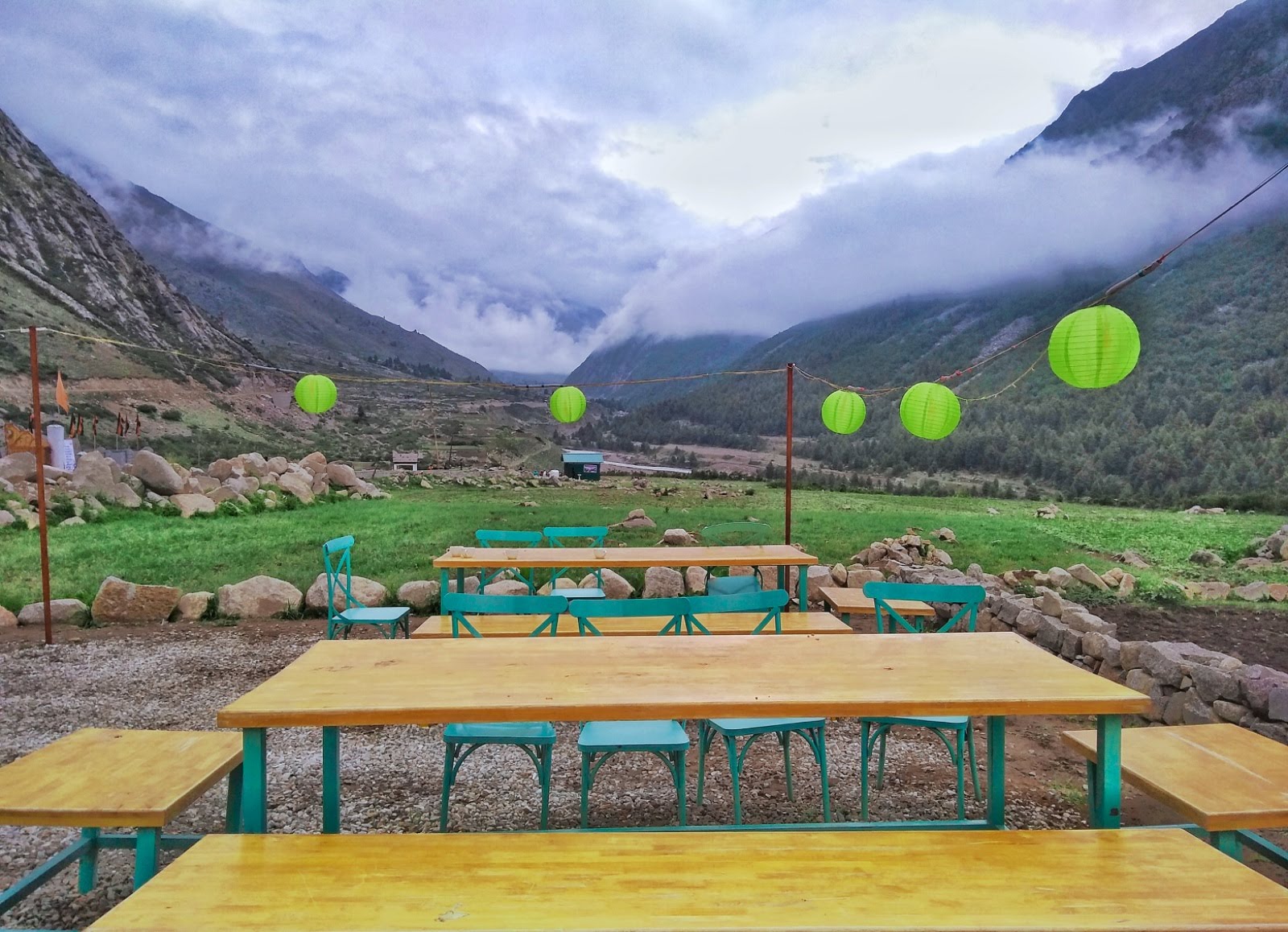
The last inhabited village on the Indo-Tibet Border. If there was one place we would choose to escape to, it would be Chitkul. There is no connectivity in this little hamlet, and that adds to its surrealness and ensures you forget the world outside for a bit. With snow-clad mountains on one side and rolling orchards on the other, Chitkul definitely makes it to the top of ‘Heaven on Earth’ places.
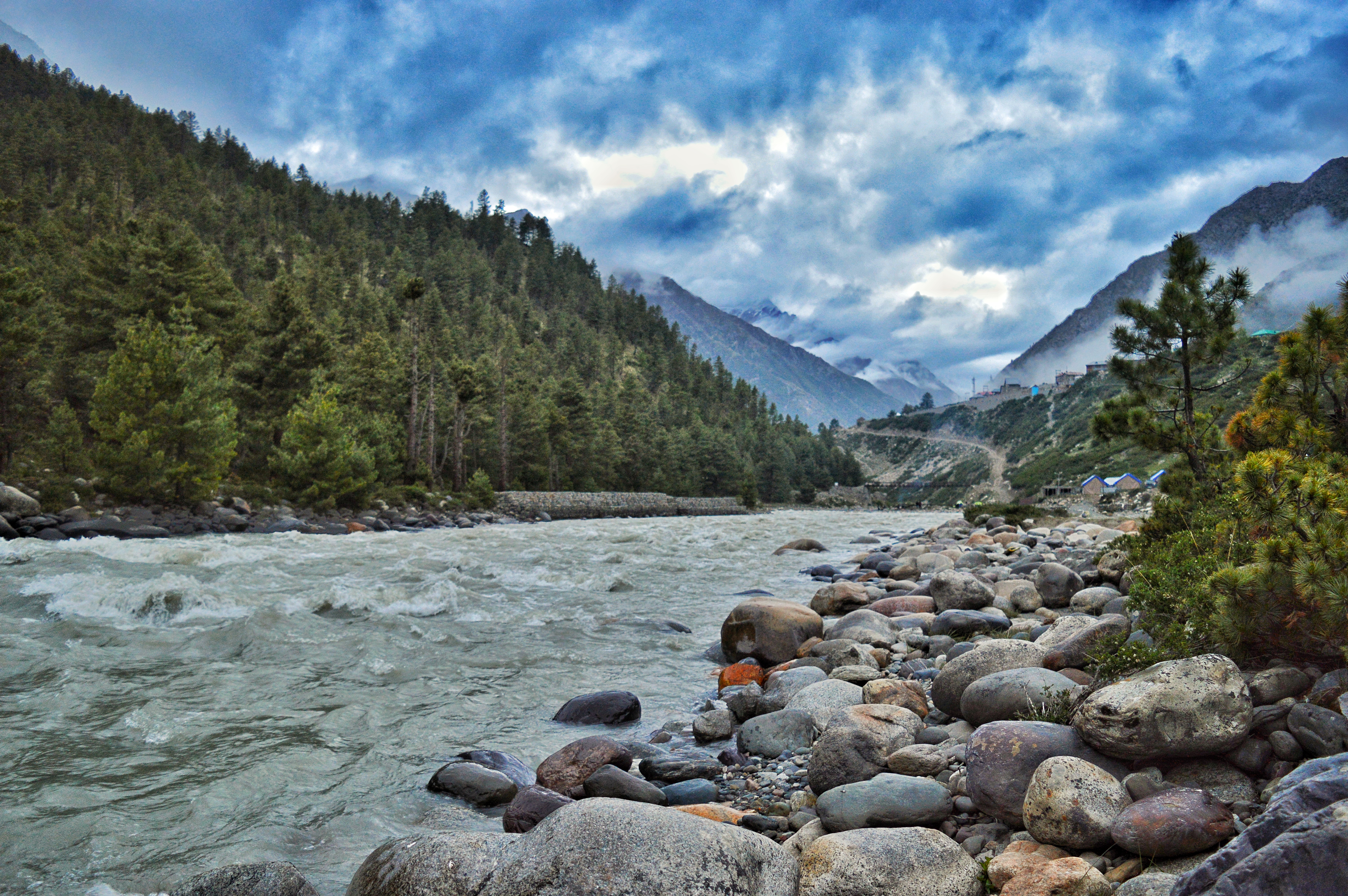
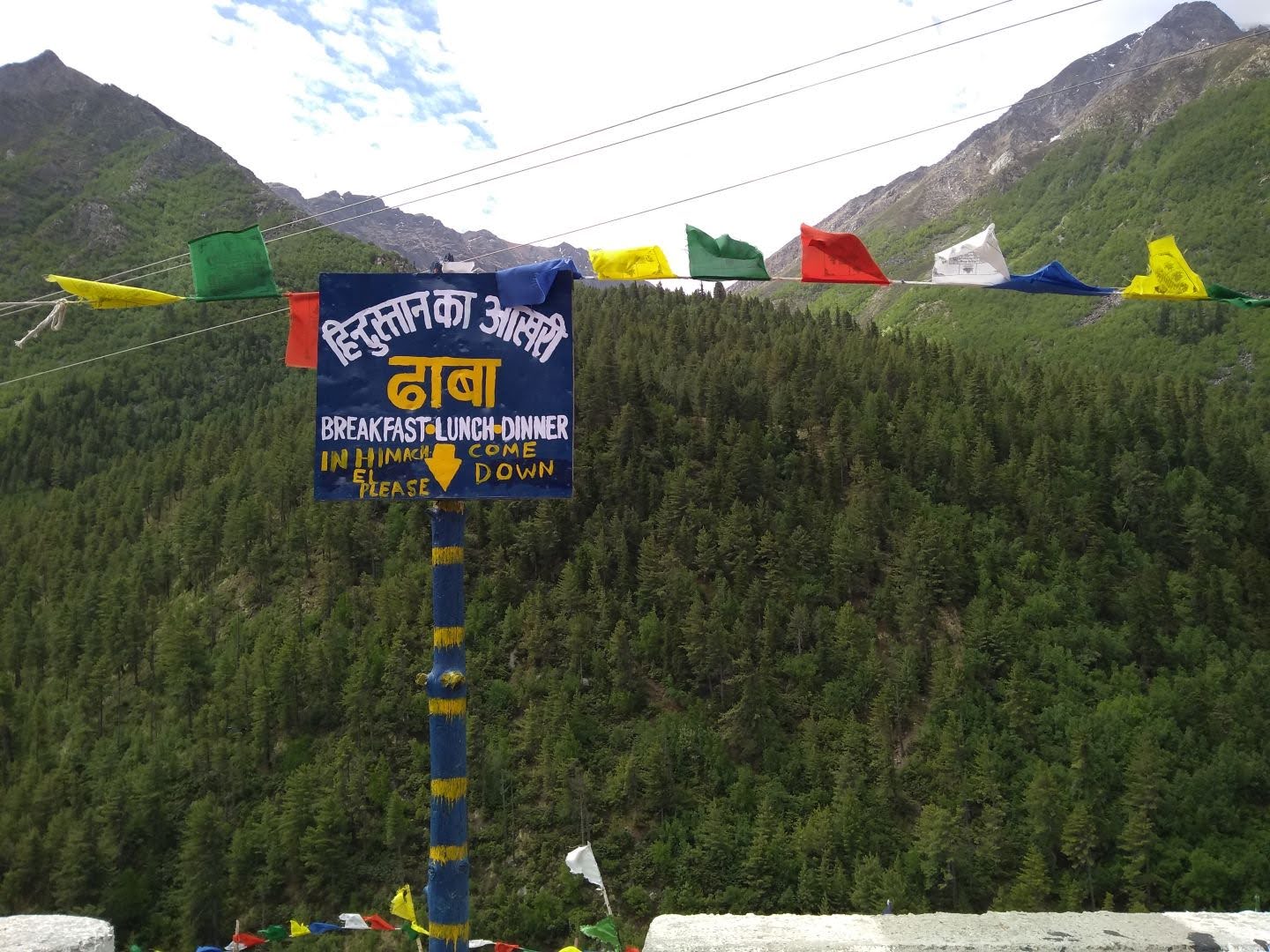
We spent an entire afternoon by the Baspa River, just contemplating life and feeling absolute gratitude for the lives we’ve built. At the same time feeling entirely inconsequential, a thing that these mighty Himalayas can easily make you feel. We could spend days doing just this. But, if you insist, there are a couple of other things to do in Chitkul, such as Mathi Devi temple, believed to be about 500 years old, its stunning architecture will blow you away. Chitkul is also home to many easy and difficult treks, from Borasu Pass Trek to Rani Kanda Meadows. Also, don’t forget to grab a bite at ‘Hindustan ka Aakhri Dhaba’.
- Reckong Peo and Kalpa
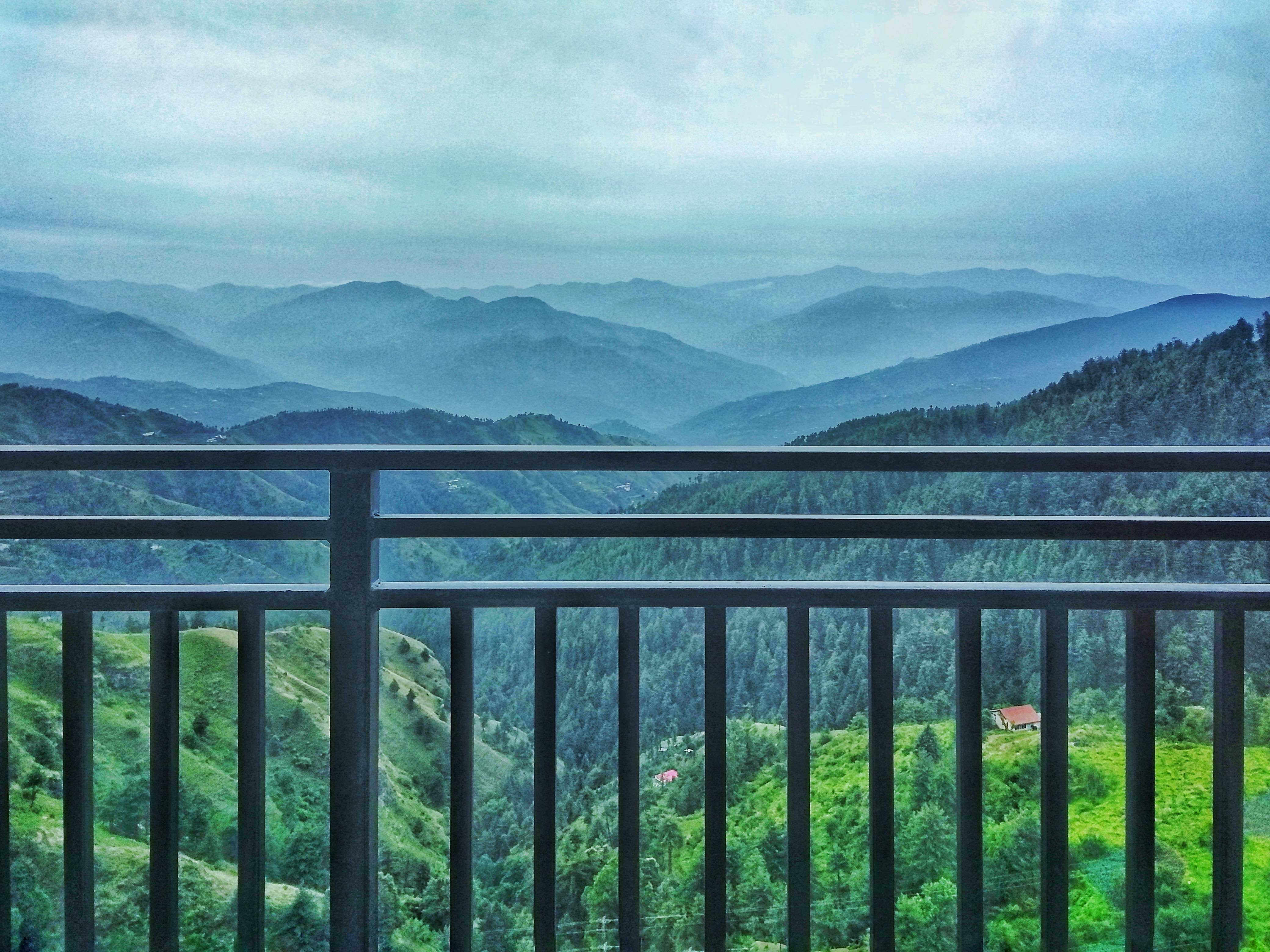
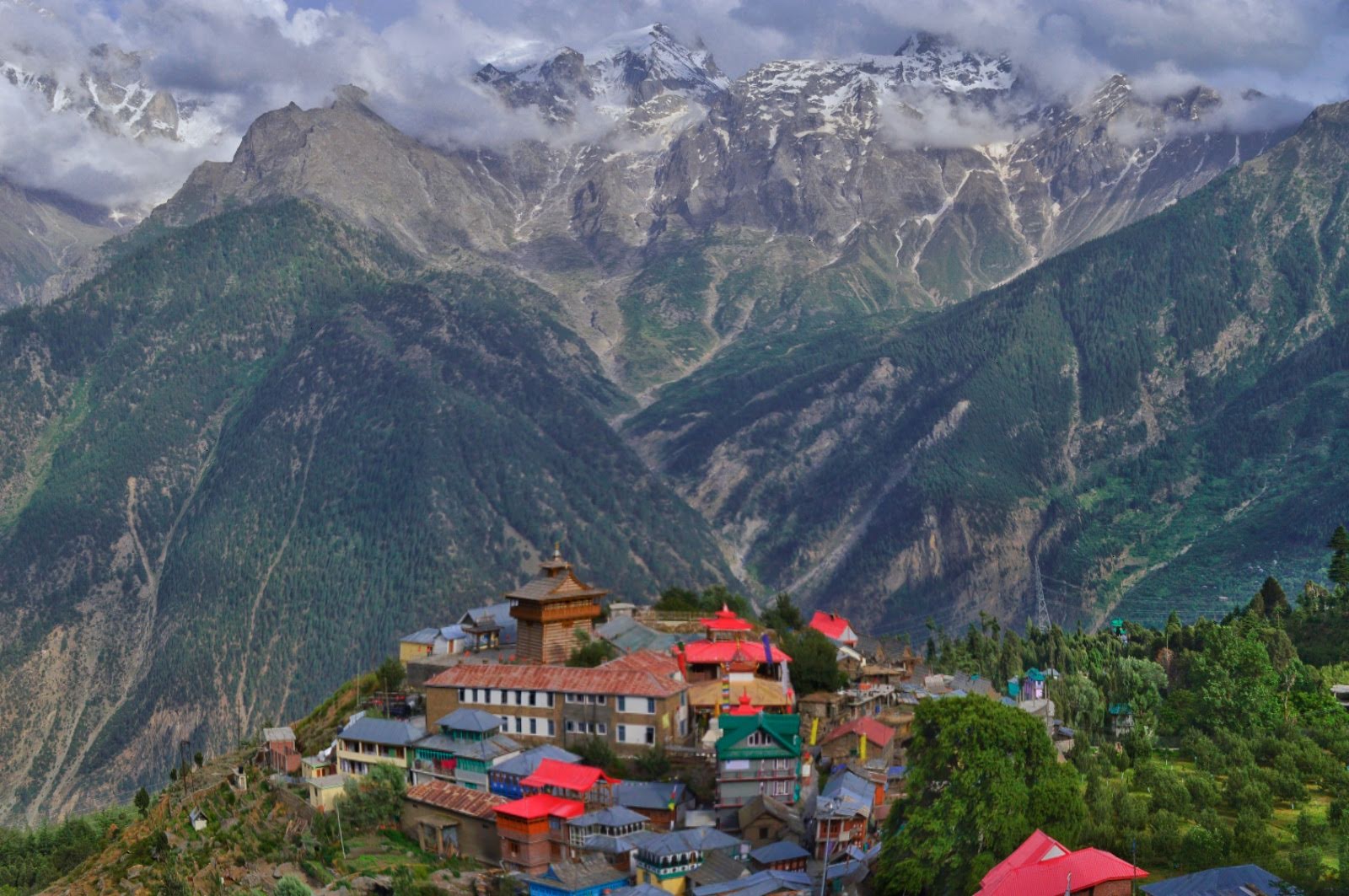
Kalpa is a short steep ascent away from Reckong Peo. The most amazing views of Kinner Kailash range await you at the top. Choose a stay on the upper side of Kalpa, this road is lined with hotels that have decent rooms and huge balconies. You are going to thank us later for the incredible sunset and sunrise views from the comforts of your room.
We paid a short visit to the revered Narayan Nagini Temple and Hu-Bu-Lan-Kar Monastery. We were in the company of many accommodative locals during these visits and were made to feel so welcome. We then left for a short ride up from Kalpa through some serene apple orchards to reach the infamous Suicide Point. An absolute stunner since there is almost a vertical drop at this point without any railing to ensure safety. While we loved this place, we would suggest caution when taking pictures here.
4. Nako
On the way to Nako Village, you will find a BRO signboard ‘World’s Most Treacherous Road’. While the claim might not be factual right, we definitely got a thrill from being able to say we traveled on that road. Trust us, the ride isn’t easy, it’s dusty, bumpy (Understatement) and tiring. But, it’s absolutely worth it. Along the way, you’ll reach Khab, where Satluj and Spiti river meet. This is where the mountains start changing from the lush greenery in Kinnaur to the rugged aridness of Spiti. That shift in landscape is going to leave you stunned.
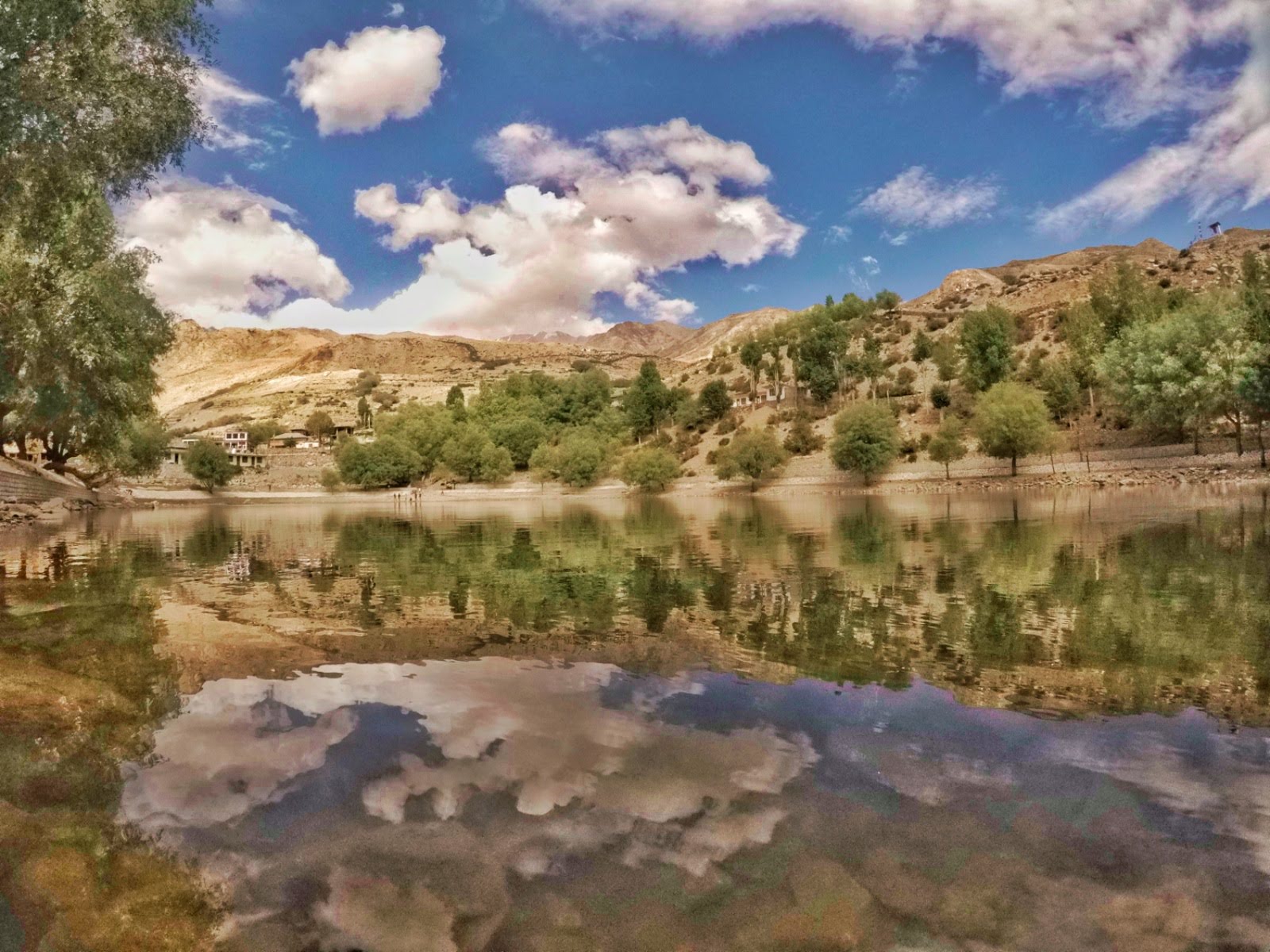
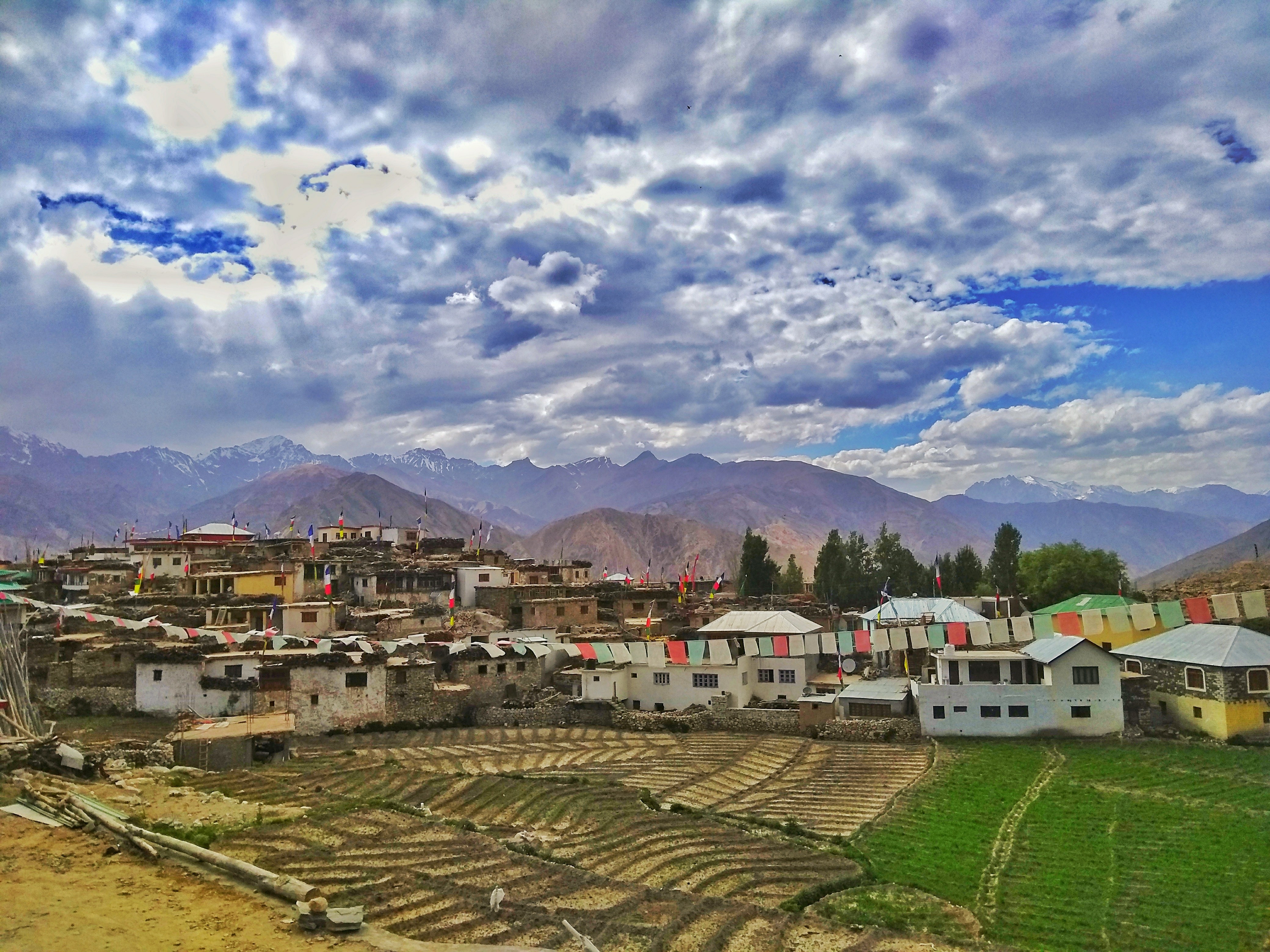
While Nako looks like it belongs to Spiti, it is still very much a part of Kinnaur Valley. Nako is a laid back village, we reached late in the afternoon and were invited by deserted roads. The only people out and about were tourists. We got lost finding our way to Nako Lake through the winding roads of the village. This Lake is considered extremely holy and is a man-made lake surrounded by stark looking Willow trees, set against the barren towering mountains. Its water in the late afternoon was emerald green in color, and looked absolutely stunning. There is also a Monastery in the village, where we spent a considerable amount of time just meditating and contemplating. The monastery is set in such a picturesque location that it demands you slow down.
6 Day Kinnaur Valley Itinerary
Day 0: Take an overnight bus from Delhi to Shimla
Day 1: Enjoy Shimla and/or the surrounding areas of Kufri and Narkanda. Spend the night in Shimla/Narkanda
Day 2: Hire a cab and set off towards Rakcham, Sangla, Chitkul. Spend the night in Chitkul
Day 3: Enjoy a day at leisure, filled with food and short hikes. Spend the night in Chitkul
Day 4: Start off early towards Kalpa and enjoy the journey through orchards and cliffs. Spend the night in Kalpa.
Day 5: An early start is needed today in order to explore Nako. You can either choose to stay at Nako (very few homestays) or return to Kalpa after exploring the village
Day 6: Return to Shimla and take an overnight bus to Delhi
We hope this helps you plan your trip to Kinnaur. We did this as part of our Spiti Valley trip and we absolutely enjoyed each minute of it.

 Winding Roads & Pages
Leave a comment